Descuento:
-5%Antes:
Despues:
108,68 ۥ Field of Vision and Visual Pathway
General Anatomy of the Visual System
Visual Field Defect Types
Parameters and Variables in Visual Field Assessment
References
Further Reading
• Methods of Visual Field Assessment
Flicker Perimetry
Presentation of Visual Field Data
Screening Programmes
Detection of Visual Field Defect and Detection of Change
Stato–Kinetic Dissociation
References
Further Reading
• Programme Choice
Choice of Perimeter
Visual Standards for Safe Driving
Interperimeter Comparisons
References
Further Reading
• Ocular Media
Introduction
Cornea
Anterior Chamber
Lens
Posterior Chamber
Visual Field Defects
References
Further Reading
• Retina
Anatomy
Pathology
Retinal Vascular Occlusions
Visual Field Defects
Choice of Visual Field Assessment
References
Further Reading
• Optic Nerve
Anatomy
Pathology
Associated Signs and Symptoms
Visual Field Defects
Choice of Visual Field Assessment
References
Further Reading
• Optic Chiasm
Anatomy
Pathology
Associated Signs and Symptoms
Visual Field Defects
Choice of Visual Field Assessment
References
Further Reading
• Optic Tract
Anatomy
Pathology
Associated Signs and Symptoms
Visual Field Defects
Choice of Visual Field Assessment
References
Further Reading
• Lateral Geniculate Body
Anatomy
Pathology
Associated Signs and Symptoms
Choice of Visual Field Assessment
References
Further Reading
• Optic Radiations
Anatomy
Pathology
Associated Signs and Symptoms
Visual Field Defects
Choice of Visual Field Assessment
References
Further Reading
• Visual Cortex
Anatomy
Pathology
Associated Signs and Symptoms
Visual Field Defects
Choice of Visual Field Assessment
References
Further Reading
• Differential Diagnosis
Age
Congruity
Eye Movement Generation
Fundus and Anterior Segment Abnormalities
Ocular Motility Abnormalities
Pupil Abnormalities
Sensory Abnormalities
Type of Visual Field Defect
Visual Acuity
Visual Field Defect Progression
Visual Perception
References
• Visual Field Artefacts and Errors of Interpretation
Esterman Programme Assessment
Fatigue
Hysterical/Functional Visual Loss and Malingering
Learning Curve
Lens Rim Defects
Ocular Variables
Patient Instruction and Set-Up
Patient Positioning
Performance Difficulties
Refractive Errors
Reliability Indices
References
Further Reading
• Glossary of Terms in Visual Field Assessment
• Discusses the pathology and presentation of visual fields in a straight-forward and clear manner
• Indicates signs and symptoms to help pinpoint the site of a lesion
• Provides examples of visual field results from automated and manual perimetry
• Covers differential diagnosis and artefacts of testing
• Features more than 200 illustrations including figures, visual field results, scans, photographs and line drawings
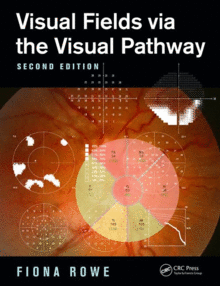
Visual Fields via the Visual Pathway presents the varying visual field deficitsoccurring with lesions of the visual pathway. The book covers anatomy, pathology and signs and symptoms, plus visual field defects associated with specific parts of the visual pathway. Also covered is the basic theory of visual field assessment.
This new edition includes updated methods of visual field assessment, additional descriptions of how individual visual field results should be interpreted, an updated review of the pros and cons of the various available test programs, and recent research advances and recommendations on baseline assessment, diagnosis, and re-assessment options to promote good clinical practice decisions.
The book expands on the previous edition to consider further types of perimetry and also updates existing perimetry information. The Octopus 900 perimetry, introduced since the first edition, features alongside Goldmann and Humphrey perimeters.Artefacts of testing are discussed as well as their identification versus actual visual field deficit. A section on differential diagnosis is also included.
Chapters include numerous illustrations of visual field results, colour plates of associated fundus images, and neuroimaging scans. References and further reading lists are also provided with key articles and up-to-date literature.
Author
Fiona Rowe, PhD, DBO, CGLI Cert. Ed., is a senior staff member in the Department of Health Services Research at the University of Liverpool, associate editor-in-chief for the journal Strabismus and editor with the Cochrane library Eyes and Vision group. Dr. Rowe qualified as an orthoptist in 1990 and has maintained combined clinical and academic research activity since that time. Her research interests include acquired brain injury, visual field evaluation and control of ocular alignment. She has been the lead for several multi-centre research projects, is the author of two textbooks, co-author on four book chapters, and has presented and published her research extensively.
Contents
• Field of Vision and Visual Pathway
• Methods of Visual Field Assessment
• Programme Choice
• Ocular Media
• Retina
• Optic Nerve
• Optic Chiasm
• Optic Tract
• Lateral Geniculate Body
• Optic Radiations
• Visual Cortex
• Differential Diagnosis
• Visual Field Artefacts and Errors of Interpretation
• Glossary of Terms in Visual Field Assessment
 -5%
-5%
 -5%
-5%
 -5%
-5%
 -5%
-5%
 -5%
-5%
 -5%
-5%
 -5%
-5%
 -5%
-5%
 -5%
-5%
 -5%
-5%