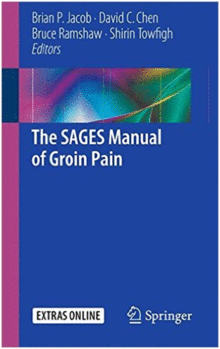
JACOB, B.P.; CHEN, D.C.; TOWFIGH, S.
Descuento:
-5%Antes:
Despues:
108,67 €1.Introduction to Primary and Secondary Groin Pain: What Is Inguinodynia?
2.Groin Pain: A Neurologic and Musculoskeletal Anatomic Review
3.Complex Regional Pain Syndrome Types I and II
4.Chief Complaint of Groin Pain: How to Take and Document a Specific Groin Pain History, Exam, and What Studies to Order
5.Groin Pain: An Overview of the Broad Differential Diagnosis
6.Groin Pain Etiology: The Inguinal Hernia, the Occult Inguinal Hernia, and the Lipoma
7.Groin Pain Etiology: Athletic Pubalgia Evaluation and Management
8.Groin Pain Etiology: Hip-Referred Groin Pain
9.Groin Pain Etiology: Spine and Back Causes
10.Groin Pain Etiology: Spermatic Cord and Testicular Causes
11.Groin Pain Etiology: Pudendal Neuralgia
12.Chronic Pelvic Pain in Women
13.Imaging for Evaluation of Groin Pain
14.Perioperative Pain Management: Multi-modalities to Prevent Postoperative Chronic Pain
15.Chronic Groin Pain Following Anterior Hernia Surgery
16.Chronic Groin Pain Following Posterior Hernia Surgery
17.The Orthopedic Perspective on Groin Pain: The Native and Prosthetic Hip
18.Algorithmic Approach to the Workup and Management of Chronic Postoperative Inguinal Pain
19.Radiologic Evaluation for Postoperative Groin Pain
20.Management of Groin Pain: Interventional and Pharmacologic Approaches
21.Dermatome Mapping: Preoperative and Postoperative Assessment
22.Management of Inguinal Hernia Recurrences (When Pain Is the Primary Symptom)
23.Mesh Removal for Chronic Pain: A Review of Laparoscopic and Open Techniques
24.Open Triple Neurectomy
25.Laparoscopic Triple Neurectomy
26.Chronic Orchialgia: Workup and Management
27.The Role of Bioactive Prosthetic Material for the Treatment of Sports Hernias
28.Prevention of Pain: Optimizing the Open Primary Inguinal Hernia Repair Technique
29.Prevention of Pain: Optimizing the Laparoscopic TEP and TAPP Techniques
30.Prophylactic Neurectomy Versus Pragmatic Neurectomy
31.Triple Neurectomy Versus Selective Neurectomy
32.Chronic Groin Pain: Mesh or No Mesh
33.Foreign Body Reaction, Fibromyalgia, and Autoimmune Disorders
34.Patient with Groin Pain After an Athletic Event
35.Chronic Post-inguinal Herniorrhaphy Pain: A Patient’s Perspective
36.Sports Hernia with Adductor Tendonitis
37.Patient with Groin Pain After a Plug and Patch Hernia Repair
38.Patient with Groin Pain After Open Inguinal Hernia Repair with Mesh
39.Patient with Groin Pain After a Lichtenstein Hernia Repair
40.Patient with Groin Pain After Tissue Repair, Anterior Approach
41.Right Inguinal Hernia with Osteitis Pubis: A Case Report of Osteitis Pubis and Ipsilateral Inguinal Hernia
42.Patient with Chronic Pelvic Pain
43.Thoracolumbar Syndrome
44.Patient with Referred Hip Pain
45.Value-Based Clinical Quality Improvement for Chronic Groin Pain After Inguinal Hernia Repair
46.Patient Care Manager Perspective on Chronic Groin Pain After Hernia Repair
47.Workers’ Compensation: An Occupational Perspective on Groin Pain, Including Psychosocial Variables, Causality, and Return to Work
This manual captures and summarizes the key elements in management of groin pain, including relevant anatomy, etiologies, diagnostic evaluation tools, imaging, detailed pharmacologic options, interventional modalities and options for operative remediation. The manual separately addresses the management of intrinsic groin pain due to primary disease processes and secondary groin pain due to a prior operation. Current practices, trends in the field, treatment approaches and controversies are addressed. While the primary audience of this book will be general surgeons performing hernia operations and pain management specialists to whom they refer, the SAGES Manual of Groin Pain will serve as a stand alone state-of-the-art resource for all providers who deal with this diagnosis, including primary care providers, sports medicine specialists, gynecologists, urologists, orthopedists, neurologists, physical medicine and rehabilitation specialists, radiologists, physical therapists, industry personnel and importantly, patients who suffer from groin pain who have copious access to health information, but without the filtering, expertise and context provided by the contributors to this manual.
This volume also uniquely provides its audience with narrative first-person accounts of some of the most common and challenging causes of pain, so that others can learn from their presentation, pitfalls, successes and failures. The expertise compiled in this manual will give the readership a pragmatic foundation to optimize the diagnosis and management of our patients with this challenging problem.
Authors
- Brian P Jacob, MD, FACS
Associate Clinical Professor of Surgery, Icahn School of Medicine at Mount Sinai;Partner, Laparoscopic Surgical Center of New York; Regional Medical Director (New York) AngelMD; Founder, International Hernia Collaboration, Inc., New York, New York
- David C. Chen, MD
Associate Professor of Clinical Surgery; Clinical Director, Lichtenstein Amid Hernia Clinic, Department of Surgery, David Geffen School of Medicine at UCLA, Santa Monica, California
- Bruce Ramshaw, MD, FACS
Co-Director, Advanced Hernia Solutions at Transformative Care Institute; Chief Medical Officer, Surgical Momentum; Chairman, the Bruce Kennedy General Surgery Residency Program at Halifax Health; Associate Clinical Professor, Florida State University, Daytona Beach, Florida
- Shirin Towfigh, MD, FACS
President, Beverly Hills Hernia Center, Beverly Hills, California
 -5%
-5%
 -5%
-5%
 -5%
-5%
 -5%
-5%
 -5%
-5%
 -5%
-5%
 -5%
-5%
 -5%
-5%
 -5%
-5%
 -5%
-5%