Descuento:
-5%Antes:
Despues:
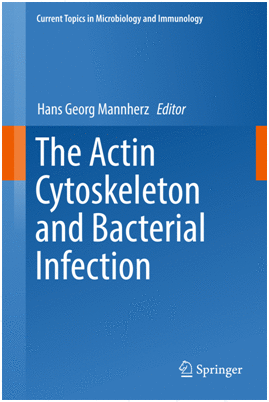
153,14 €1. Actin: Structure, Function, Dynamics, and Interactions with Bacterial Toxins
2. Formation of Nanotube-Like Protrusions, Regulation of Septin Organization and Re-guidance of Vesicle Traffic by Depolymerization of the Actin Cytoskeleton Induced by Binary Bacterial Protein Toxins
3. Photorhabdus luminescens Toxins TccC3 and TccC5 Affect the Interaction of Actin with Actin-Binding Proteins Essential for Treadmilling
4. Comparative Studies of Actin- and Rho-Specific ADP-Ribosylating Toxins: Insight from Structural Biology
5. Pathogenic Mechanisms of Actin Cross-Linking Toxins: Peeling Away the Layers
6. ActA of Listeria monocytogenes and Its Manifold Activities as an Important Listerial Virulence Factor
7. Actin-Dependent Regulation of Borrelia burgdorferi Phagocytosis by Macrophages
8. New Aspects on Bacterial Effectors Targeting Rho GTPases
9. Type III Secreted Virulence Factors Manipulating Signaling to Actin Dynamics
10. Acting on Actin: Rac and Rho Played by Yersinia
11. Bacterial Actins and Their Interactors
This volume describes the mechanisms which bacteria have created to secure their survival, proliferation and dissemination by subverting the actin cytoskeleton of host cells. Bacteria have developed a veritable arsenal of toxins, effector proteins and virulence factors that allow them to modify the properties of the intracellular actin cytoskeleton for their own purposes. Bacterial factors either modify actin directly as the main component of this part of the cytoskeleton or functionally subvert regulatory or signalling proteins terminating at the actin cytoskeleton.
In short, this volume provides an overview of the various tricks bacteria have evolved to “act on actin” in order to hijack this essential host cell component for their own needs. As such, it will be of interest to scientists from many fields, as well as clinicians whose work involves infectious diseases.
Features
• Presents a comprehensive overview of the actin modifying actions of bacterial toxins
• Bridges the gap between common knowledge, new findings and new concepts for therapeutic approaches
• A valuable resource for microbiologists, cell biologists, and clinicians whose work involves infectious diseases
Author
Hans Georg MannherzRuhr-Universität BochumInstitut für AnatomieAbteilung für Anatomie und molekulare Embryologiee-mail: Hans.Mannherz@ruhr-uni-bochum.de
 -5%
-5%
 -5%
-5%
 -5%
-5%
 -5%
-5%
 -5%
-5%
 -5%
-5%
 -5%
-5%
 -5%
-5%
 -5%
-5%
 -5%
-5%