Descuento:
-5%Antes:
Despues:
136,80 ۥ Part I. Crisis Resource Management: Non-Technical Skills of Team Performance
1. A Critical Approach to the Unstable Patient
2. Teamwork and Crisis Resource Management
3. Cognitive Aids in Current Practice
• Part II. Cardiac Crises
4. Introduction to Perioperative Cardiac Urgencies and Emergencies
5. Myocardial Ischemia
6. Aortic Disruption
7. Cardiac Dysrhythmias
8. Severe Valvular Disease
• Part III. Shock
9. Introduction to Shock
10. Cardiogenic Shock
11. Distributive Shock
12. Hypovolemic Shock
13. Obstructive Shock
• Part IV. Pulmonary Crises
14. Introduction to pulmonary urgencies and emergencies
15. Difficult Airway
16. Laryngospasm
17. Aspiration Pneumonitis
18. Physiologic Airflow Disruption: Bronchospasm, Obstructive Lung Disease, Asthma, and Status Asthmaticus
19. Mechanical Airflow Disruption
20. Disruption of Diffusion: Inflammation
21. Disruption of Diffusion: Air Space Disease
22. Pneumothorax
23. Hypoxia during anesthesia: machine and monitor issues
24. Airway Fire
• Part V. Metabolic and Endocrine Crises
25. Introduction to Metalbolic and Endocrine Diseases
Section A. Metabolic Disturbances
26. Malignant Hyperthermia
27. Porphyria
28. Undiagnosed Pheochromocytoma
29. Perioperative Adrenal Crisis
30. Cushing's Disease
Section B. Endocrine Disturbances
31. Diabetic Ketoacidosis
32. Hyperglycemic Hyperosmolar State (HHS)
33. Hypoglycemia
34. Thyrotoxicosis
35. Myxedematous Coma
36. Acute Liver Failure
Section C. Electrolyte Disturbances
37. Hyperkalemia/Hypokalemia
38. Hyponatremia/Hypernatremia
39. Hypocalcemia/Hypercalcemia
40. Hypomagnesemia/Hypermagnesemia
• Part VI. Obstetric Crises
41. Introduction to Peripartum Urgencies and Emergencies for the Anesthesia Provider
Section A. Maternal collapse
42. Obstetric Life Support: PEA/Asystole and Pulseless VT/VF
43. Perimortem Cesarean Delivery for Maternal Cardiac Arrest
44. STAT Caesarean Delivery - Preparation, Planning, & Team Performance
45. High or total spinal/epidural
46. Peripartum cardiomyopathy
47. Peripartum Embolism
48. Systemic Inflammatory Response Syndrome (SIRS) and Sepsis in the Pregnant Patient
49. Severe Preeclampsia
50. Severe Peripartum Hemorrhage
51. Valvular Disease: Specific Considerations for Management during Labor and Delivery
52. Vessels: Coronary Artery Disease in Pregnancy and Peripartum Acute Coronary Syndrome
53. Voltage Disturbances During Pregnancy
Section C. Pulmonary/Airway Crises
54. Difficult airway: special considerations in pregnancy
55. Asthma and Pregnancy
Section D. Neurologic Crises
56. Stroke/Subarachnoid Hemorrhage and Pregnancy
57. Post-Dural Puncture Headache (PDPH)
Section E. Metabolic/Endocrine Crises
58. Diabetic Emergencies in Pregnancy
Section F. Toxins
59. Magnesium Toxicity
60. Local Anesthetic Systemic Toxicity in Pregnancy
• Part VII. Neurologic Crises
61. Introduction to Acute Neurologic Events in the Perioperative Period
Section A. Cerebral Origin
62. Delirium
63. Nontraumatic Intracranial Hemorrhage
64. Acute Stroke
65. Postoperative Visual Loss
66. Seizure or Status Epilepticus
67. Traumatic Brain Injury - Traumatic Subdural Hemorrhage/Epidural Hemorrhage
68. Refractory Intracranial Hypertension
69. Cerebral Salt Wasting
70. Acute Loss of Intraoperative Evoked Potential Signals
Section B. Spinal Cord, PNS, and NMJ origin
71. Autonomic Dysreflexia
72. Neurogenic Shock
73. Muscle Weakness
74. Nerve Injuries from Positioning and Regional Blocks
Section C. Systemic Origin
75. Hepatic Encephalopathy
• Part VIII. Pediatric Crises
76. Introduction to Pediatric Crises
Section A. Cardiac Crises
77. Emergency non-cardiac surgery in the congenital heart disease patient
Section B. Pulmonary Crises
78. Epiglottitis, Croup, and Stridor
79. Acute Severe Asthma and Bronchospasm
80. Bleeding tonsil s/p T&A resection
81. Drowning and Near Drowning
Section C. Neurologic Crises
82. Seizures and Status Epilepticus
Section D. Other Crises
83. Pyloric stenosis
84. Sickle Cell Disease
85. Hemophilia (presentation in emergency surgery)
• Part IX. Toxins
86. Introduction to Perioperative Crisis Management: Toxins
Section A. Specific Toxicities
87. Local Anesthesia Systemic Toxicity
88. Beta-blocker/Calcium Channel Blocker Overdose
89. Cocaine Intoxication and Hypertensive Emergency
90. Coagulation System: Emergency Surgery in the Patient taking Warfarin or Low Molecular Weight Heparin
91. Coagulation System: Direct Oral Anticoagulants
92. Opioid and Benzodiazepine Overdose
93. Alcohol Withdrawl
94. Serotonin Toxicity
95. Anticholinergic Overdose
96. Insulin Overdose
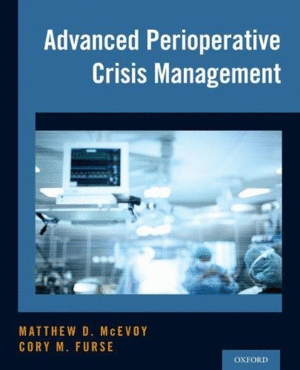
Advanced Perioperative Crisis Management is a high-yield, clinically-relevant resource for understanding the epidemiology, pathophysiology, assessment, and management of a wide variety of perioperative emergencies.
Three introductory chapters review a critical thinking approach to the unstable or pulseless patient, crisis resource management principles to improve team performance and the importance of cognitive aids in adhering to guidelines during perioperative crises. The remaining sections cover six major areas of patient instability: cardiac, pulmonary, neurologic, metabolic/endocrine, and toxin-related disorders, and shock states, as well as specific emergencies for obstetrical and pediatric patients. Each chapter opens with a clinical case, followed by a discussion of the relevant evidence. Case-based learning discussion questions, which can be used for self-assessment or in the classroom, round out each chapter.
Advanced Perioperative Crisis Management is an ideal resource for trainees, clinicians, and nurses who work in the perioperative arena, from the operating room to the postoperative surgical ward.
Features
• Explores six major areas of patient instability
• Provides best-practice evidence for a wide array of clinical scenarios and diagnoses
• Case-based learning discussions can be used for self-assessment or in the classroom
Authors
• Matthew D. McEvoy, Vice Chair for Educational Affairs, Program Director, and Associate Professor, Department of Anesthesiology, Vanderbilt University Medical Center.
• Cory M. Furse, Assistant Professor of Anesthesiology, Medical University of South Carolina
 -5%
-5%
 -5%
-5%
 -5%
-5%
 -5%
-5%
 -5%
-5%
 -5%
-5%
 -5%
-5%
 -5%
-5%
 -5%
-5%
 -5%
-5%