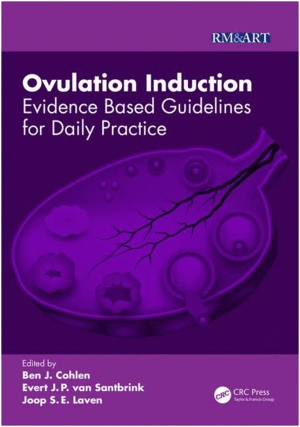
COHLEN, B.J.; VAN SANTBRINK, E.; LAVEN, J.
Descuento:
-5%Antes:
Despues:
78,85 ۥ Physiology of the menstrual cycle: Understanding the principles of ovarian stimulation.
• Classification of anovulation.
• Causes of anovulation: WHO class 1.
• Causes of anovulation: WHO class 2, non-PCOs.
• Causes of anovulation: WHO class 2;
• Polycystic Ovary Syndrome.
• Causes of anovulation: WHO class 3.
• Other endocrine disorders causing anovulation: Congenital Adrenal Hyperplasia.
• Other endocrine disorders: Thyroid disorders.
• Other endocrine disorders: Prolactinomas.
• Genetics of anovulation.
• Diagnostics of anovulation.
• Ovulation induction versus controlled ovarian hyperstimulation.
• Monitoring of ovulation induction cycles.
• Treatment of WHO 1: GnRH or gonadotropins?.
• Treatment of WHO 2: Clomiphene citrate.
• Treatment of WHO 2: Aromatase inhibitors.
• Treatment of WHO 2: Insulin sensitizers.
• Treatment of WHO 2: Laparoscopic electrocautery of the ovaries.
• Treatment of WHO 2: Gonadotropins and the role of GnRH agonists and antagonists.
• Treatment of WHO 2: Lifestyle modifications.
• Treatment of WHO 3.
• How to define success in ovulation induction.
• Complications of ovarian stimulation: Multifollicular development.
• Complications of ovarian stimulation: Ovarian Hyperstimulation Syndrome.
• Complications of ovarian stimulation: Multiple pregnancies. Long-term complications of anovulation.
• Predicting outcome of treating anovulation.
• Future prospectives.
• Summary: Level of evidence of statements.
• Summary: Strength of grade of recommendations.
Anovulation – one of the most common causes of infertility – is here given a thorough review, with classification of the different subtypes, how they are diagnosed, how they are treated, and the possible complications and outcomes involved. This is a comprehensive evidence-based summary from an international expert team, with guidelines for daily practice clearly stated and summarized for your convenience.
Features
• Emphasizes evidence-based medicine
• Provides summary chapters on evidence for all main statements and all main recommendations
• Includes international contributions
 -5%
-5%
 -5%
-5%
 -5%
-5%
 -5%
-5%
 -5%
-5%
 -5%
-5%
 -5%
-5%
 -5%
-5%
 -5%
-5%
 -5%
-5%