Descuento:
-5%Antes:
Despues:
74,10 €1 Neuromuscular Diseases: Approach to Clinical Diagnosis
• part I myopathies
2 Approach to Diseases of Muscle
3 Inflammatory Myopathies
4 Toxic Myopathies
5 Metabolic Myopathies
6 Mitochondrial Myopathies
7 Dystrophinopathies
8 Limb–Girdle Dystrophies
9 Facioscapulohumeral Dystrophy
10 Myotonic Dystrophies
11 Oculopharyngeal Muscular Dystrophy
12 Distal Myopathies
13 Muscle Channelopathies
14 Congenital Myopathies
• part II disorders of the neuromuscular junction
15 Approach to Diseases of the Neuromuscular Junction
16 Myasthenia Gravis
17 Botulism
18 Lambert–Eaton Myasthenic Syndrome
19 Congenital Myasthenic Syndromes
• part III disorders of peripheral nerve
20 Approach to Diagnosis of Peripheral Nerve Disease
21 Hereditary Motor Sensory Neuropathies (Charcot–Marie–Tooth Disease)
22 Diabetic Neuropathies
23 Toxic and Metabolic Neuropathies
24 Acute Infl ammatory Demyelinating Neuropathies and Variants
25 Chronic Immune-mediated Demyelinating Polyneuropathies
26 Vasculitic Neuropathies
27 Paraneoplastic Neuropathies
28 Brachial and Lumbosacral Plexopathies
• part IV disorders of motor neurons
29 Approach to Diseases of the Motor Neurons
30 Spinal Muscular Atrophy
31 Amyotrophic Lateral Sclerosis
32 Neuromuscular Disorders in the Intensive Care Unit
Index
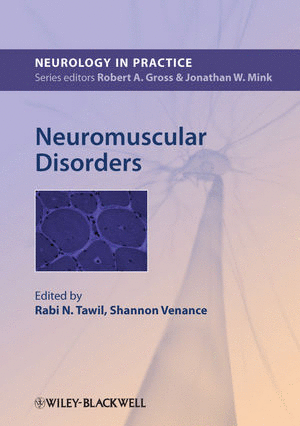
A practical framework for patients with problems that localize to the neuromuscular system
Our understanding of neuromuscular disease has advanced greatly in recent years. This has brought increased treatment options but also increased complexity. Diagnosis remains predominantly a clinical exercise. Early and accurate diagnosis coupled with modern medical management can increase the life quality and life expectancy of patients with neuromuscular disease.
Neuromuscular Disorders presents a practical framework for managing patients with neuromuscular dysfunction. It covers the spectrum of disease from the common to the rare with handy tips and tricks to improve clinical practice.
Beginning with a guide to clinical diagnosis it includes:
• Myopathies
• Disorders of the neuromuscular junction
• Disorders of peripheral nerve
• Disorders of motor neurons
Clinical in approach, practical in execution, Neuromuscular Disorders will help you diagnose and manage your patients more effectively.
Authors
• Rabi N. Tawil, MD, University of Rochester Medical Center, Rochester, New York, USA
• Shannon Venance, MD, PhD, FRCPCP, The University of Western Ontario, London, Ontario, Canada
 -5%
-5%
 -5%
-5%
 -5%
-5%
 -5%
-5%
 -5%
-5%
 -5%
-5%
 -5%
-5%
 -5%
-5%
 -5%
-5%
 -5%
-5%