Descuento:
-5%Antes:
Despues:
189,70 €1 Introduction 1
2 Electrophysiological Recording Techniques 7
3 Multi-Unit Recording 55
4 The “New Math” of Neuroscience: Genetic Tools for Accessing and Electively Manipulating Neurons 75
5 Computer Simulation—Power and Peril 107
6 Evolution of Motor Systems 135
7 Motor Pattern Selection 177
8 Neural Networks for the Generation of RhythmicMotor Behaviors 225
9 Sensory Feedback in the Control of Posture and Locomotion 263
10 Coordination of Rhythmic Movements 305
11 Prehensile Movements 341
12 Muscle, Biomechanics, and Implications for Neural Control 365
13 Plasticity and Learning in Motor Control Networks 417
14 Bio-inspired Robot Locomotion 443
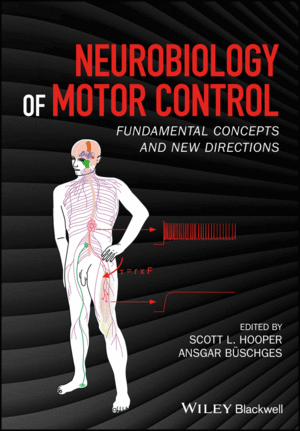
A multi-disciplinary look at the current state of knowledge regarding motor control and movement—from molecular biology to robotics
The last two decades have seen a dramatic increase in the number of sophisticated tools and methodologies for exploring motor control and movement. Multi-unit recordings, molecular neurogenetics, computer simulation, and new scientific approaches for studying how muscles and body anatomy transform motor neuron activity into movement have helped revolutionize the field. Neurobiology of Motor Control brings together contributions from an interdisciplinary group of experts to provide a review of the current state of knowledge about the initiation and execution of movement, as well as the latest methods and tools for investigating them.
The book ranges from the findings of basic scientists studying model organisms such as mollusks and Drosophila, to biomedical researchers investigating vertebrate motor production to neuroengineers working to develop robotic and smart prostheses technologies. Following foundational chapters on current molecular biological techniques, neuronal ensemble recording, and computer simulation, it explores a broad range of related topics, including the evolution of motor systems, directed targeted movements, plasticity and learning, and robotics.
• Explores motor control and movement in a wide variety of organisms, from simple invertebrates to human beings
• Offers concise summaries of motor control systems across a variety of animals and movement types
• Explores an array of tools and methodologies, including electrophysiological techniques, neurogenic and molecular techniques, large ensemble recordings, and computational methods
• Considers unresolved questions and how current scientific advances may be used to solve them going forward
Written specifically to encourage interdisciplinary understanding and collaboration, and offering the most wide-ranging, timely, and comprehensive look at the science of motor control and movement currently available, Neurobiology of Motor Control is a must-read for all who study movement production and the neurobiological basis of movement—from molecular biologists to roboticists.
Author Information
• SCOTT L. HOOPER, PhD, is a Professor in the Department of Biological Sciences at Ohio University and Visiting Professor at the University of Cologne.
• ANSGAR BÜSCHGES, PhD, is Professor and Head of the Department of Animal Physiology at the University of Cologne. He has served as Dean of the University of Cologne's Faculty of Mathematics and Natural Sciences and is a member of the Executive Committee of the German Neuroscience Society.
 -5%
-5%
 -5%
-5%
 -5%
-5%
 -5%
-5%
 -5%
-5%
 -5%
-5%
 -5%
-5%
 -5%
-5%
 -5%
-5%
 -5%
-5%