Descuento:
-5%Antes:
Despues:
135,85 €Contents
Foreword, Preface, Acknowledgements; 1. Approach to Hematolymphoid Specimens, Normal Findings; 2. Myeloproliferative Neoplasms (MPNs); 3. Myeloid and Lymphoid Neoplasms Associated with Eosinophilia and Abnormalities ofPDGFRA, PDGFRB, or FGFR1; 4. Myelodysplastic/Myeloproliferative neoplasms (MDS/MPN); 5. Myelodysplastic Syndromes (MDS); 6. Acute Myeloid Leukemia and Related Precursor Neoplasms; 7. Acute Leukemias of Ambiguous Lineage; 8. Precursor Lymphoid Neoplasms; 9. Mature B-cell Neoplasms; 10. Mature T- and NK-Cell Neoplasms; 11. Hodgkin Lymphoma; 12. Histiocytic and Dendritic Cell Neoplasms; 13. Immunodeficiency-associated lymphoproliferative disorders
Description
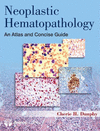
Neoplastic Hematopathology provides a concise, visual approach to guide practicing pathologists, hematopathologists, hematologists, oncologists, internists, and trainees to a clear analysis and diagnosis of myeloid and lymphoid specimens. Coverage is comprehensive and for each entity includes a short text description of the key points of the entity-definition; morphologic features; special stains, immunohistochemistry and flow cytometry techniques; differential diagnosis; diagnostic features; special issues (e.g., prognostic or other considerations to note). Images in Neoplastic Hematopathology highlight differential diagnostic features, especially the correlation and integration of standard H & E stains with molecular and immunologic techniques.
Neoplastic Hematopathology: An Atlas and Concise Guide Features:
Clear, concise coverage across the wide range of hematopathologic entities based on the current World Health Organization (WHO) classification
Topics selected on the basis of "must-know" entities for the practicing pathologist or trainee
An emphasis on integration of routine and special stains with immunologic and molecular techniques, reflecting the most current standards of practice
Outstanding images selected to highlight key differential points and potentially misleading variants
About the Author
Cherie Dunphy, MD - Professor, and Director of Hematopathology, Department of Pathology and Laboratory Medicine, University of North Carolina, Chapel Hill, Chapel, NC
 -5%
-5%
 -5%
-5%
 -5%
-5%
 -5%
-5%
 -5%
-5%
 -5%
-5%
 -5%
-5%
 -5%
-5%
 -5%
-5%
 -5%
-5%