Descuento:
-5%Antes:
Despues:
163,61 ۥ Section 1 Introduction 1
1 Molecular and Biochemical Toxicology: Definition and Scope 3
• Section 2 Techniques in Biochemical and Molecular Toxicology 11
2 Molecular Techniques for the Study of Gene Function 13
3 Transcriptomics 55
4 Proteomics 91
5 Metabolomics 115
6 Cellular Techniques 135
7 Basic Concepts of Molecular Epidemiological Research Methods 159
• Section 3 Mechanisms in Molecular and Biochemical Toxicology 187
8 Phase I and Phase II Metabolism and Metabolic Interactions: A Summary 189
9 Structure, Mechanism, and Regulation of Cytochromes P450 209
10 Polymorphisms in Phase I and Phase II Genes and Outcomes 239
11 Cellular Transport and Elimination 273
12 Nuclear Receptors 293
13 Mechanisms of Cell Death 327
14 Mitochondrial Dysfunction 371
15 Reactive Metabolites, Reactive Oxygen Species (ROS), and Toxicity 391
16 DNA Damage and Mutagenesis 421
17 DNA Repair 485
18 Carcinogenesis 535
• Section 4 Molecular and Biochemical Aspects of Organ Toxicology 589
19 Molecular Mechanisms of Respiratory Toxicity 591
20 Molecular Mechanisms of Hepatotoxicity 629
21 Molecular Mechanisms of Renal Toxicology 665
22 Molecular Mechanisms of Neurotoxicity 709
23 Molecular Mechanisms of Immunotoxicity 773
24 Molecular Mechanisms of Reproductive Toxicity 823
25 Molecular Mechanisms of Developmental Toxicity 851
• Section 5 Emerging Areas in Molecular and Biochemical Toxicology 877
26 Computational and Molecular Approaches to Risk Assessment 879
27 Nanotoxicology 909
28 Developmental Origins of Health and Disease 933
29 Exposome 945
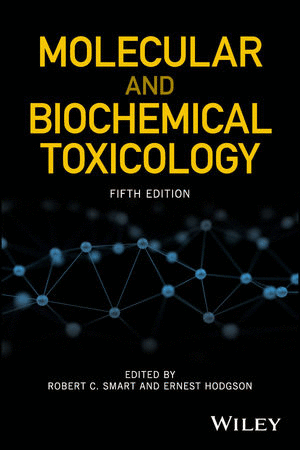
Though stemming from the editors course at North Carolina State and written as an advanced text for toxicology students, this book is much more than an introductory book and provides in-depth information describing the underlying biochemical, molecular, and cellular mechanisms through which toxicants produce their adverse responses. Toxicologic issues are covered from both an organ-based approach along with the basic principles of toxicology and methodology. While toxicology is a broad and comprehensive science, it is also true that different areas progress at different rates and that molecular and mechanistic approaches have seen dramatic advances since the 4th edition of Molecular and Biochemical Toxicology published. Changes in the 5th edition stress these advances in molecular techniques and their contributions to fundamental mechanisms of toxic action. At the same time, the 5th edition provides continuity with advances in organ toxicity and develops ideas as to future applications.
 -5%
-5%
 -5%
-5%
 -5%
-5%
 -5%
-5%
 -5%
-5%
 -5%
-5%
 -5%
-5%
 -5%
-5%
 -5%
-5%
 -5%
-5%