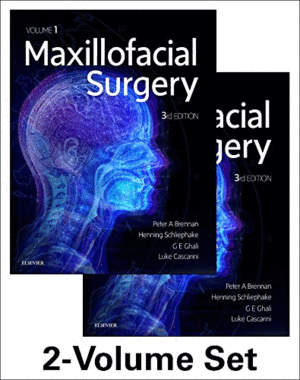
BRENNAN, P.; SCHLIEPHAKE, H.; GHALI, G.E.; CASCARINI, L.
Descuento:
-5%Antes:
Despues:
396,19 ۥ Part 1: Trauma
1. Etiology and Changing Patterns of Maxillofacial Trauma
2. Primary Care of Maxillofacial Injuries
3. Establishing a Clinical Diagnosis And Surgical Treatment Plan
4. Principles of Fracture Management: Reduction, Choice of Fixation, and Timing of Treatment
5. Surgical Management of Mandibular Fractures
6. Condylar Fractures
7. Surgical Management of Maxillary and Zygomatic Fractures
8. Surgical Management of Craniofacial, Nasoethmoid, and Grossly Comminuted Midface Fractures
9. Periorbital and Intraorbital Trauma and Orbital Reconstruction
10. Pediatric Maxillofacial Trauma
11. Primary Management of Soft Tissue Trauma and Nerve Reconstruction
12. Neurosurgical Considerations in Craniofacial Trauma
13. Management of Military Ballistic Injuries to the Face and Neck
• Part 2: Oncology
14. The molecular biology of head and neck cancer
15. Prognostic Factors in Oral, Oropharyngeal, and Salivary Gland Cancer
16. Molecular Biology of Human Papillomavirus (HPV) Mediated Head and Neck Cancer
17. The Team Approach in the Management of Head and Neck Cancer
18. The Role of Diagnostic Radiology in Head and Neck Cancer
19. Heath-Related Quality of Life (HRQOL) in Head and Neck Surgery
20. Radiotherapy in the Management of Orofacial Cancer
21. Chemotherapy and Targeted Agents
- Section 1: Principles of Ablative Surgery
22. Anesthesia and Airway Management for Oral Cancer and Microvascular Surgery
23. Ablative Surgery for Cancer of the Tongue, Floor of Mouth, and Mandible
24. Ablative Surgery for Malignant Tumours of the Maxilla, Nasal, and Paranasal Sinuses
25. NECK DISSECTON
26. Branchial Cysts
27. Primary Neck Masses
28. Vascular Lesions of the Head and Neck
29. Tumors of the Skull Base
30. Locally Aggressive Benign Jaw Tumors
- Section 2: Principles of Reconstructive Surgery
31. Principles of Reconstruction
32. Principles of Microvascular Surgery
33. Reconstruction of the Maxilla
34. Mandibular Reconstruction
35. The Radial Forearm
36. Common Free Vascularized Flaps: The Fibula
37. The Rectus Abdominis
38. Common Free Vascularized Flaps: The Scapula -
39. Common Free Vascularized Flaps: The Latissimus Dorsi
40. Vascularised Iliac Crest Grafts
41. The Anterolateral Thigh and Other Perforator Flaps
42. Other Free Flaps Used in Head and Neck Reconstruction
43. Local and Regional Flap Reconstruction of Maxillofacial Defects
44. Facial Transplantation
45. Tissue engineering
- Section 3: Surgical Management of Salivary Disease
46. Principles of Management of Neoplastic Salivary Gland Disease
47. Imaging of Salivary Glands
48. Surgical Techniques for Parotid and Submandibular Glands and Ranulae
49. Salivary Endoscopy
50. Immediate Facial Nerve Reconstruction Following Iatrogenic Injuries
- Section 4: Surgical Management of Facial Skin Tumors
51. Skin Cancer of the Head and Neck
52. Cutaneous Lesions of the Periorbital and Lid Region
53. Cutaneous and Mucosal Lip Lesions and their Reconstruction
54. Nonsurgical Management of Non-Melanoma Skin Cancer
- Section 5: Surgical Rehabilitation and Long Term Care
55. Prosthetic Rehabilitation and Implantology after Cancer Ablation
56. Reconstruction After Tumor Ablation: Extra-Oral Implants
57. Palliative Therapy, Terminal Care, and Counseling
• Part 3: Craniofacial Deformity
58. Classification, Diagnosis and Etiology of Craniofacial Deformities
59. Principles of Craniofacial Surgery and the Management of Complications
60. Psychosocial Aspects of Visual Facial Difference
61. Surgical Management of Craniosynostosis
62. Hemifacial Microsomia: The Disorder and Its Surgical Management
63. Treacher Collins Syndrome
64. Osteodistraction: The Present and the Future
65. Reanimation in Congenital Disorders
• Section 2: Surgical Management of Cleft Lip and Palate Patients
66. Cleft Lip and Palate and Evidence-based Care
67. Techniques for cleft lip repair
68. Technique for cleft Palate Repair
69. Alveolar Cleft Defect Bone Grafting
70. Secondary Cleft Surgery
71. The Role of the Speech and Language Therapist in the Care of the Individual with Cleft Palate and Velopharyngeal Dysfunction
72. Secondary Palatal Surgery and Pharyngoplasty
73. Orthodontics in Cleft Care
• Section 3: Orthognathic Surgery
74. Surgical Planning in Orthognathic Surgery and Outcome Stability
75. The Orthodontic Surgical Interface
76. Orthognathic Surgical Techniques
77. Avoiding Surgical Complications in Orthognathic Surgery
• Section 4: Esthetic Facial Surgery
78. Overview of Facial Aesthetic Surgery: Indications and Patient Selection
79. Surgical Techniques: The Forehead and Brow
80. Facelift
81. Management of the Aging Neck
82. Cosmetic Surgery of the Eyes
83. Basic Rhinoplasty
84. Ear Reconstruction and pinaplasty
85. Skin Rejuvenation and Resurfacing
86. Facial Bone Sculpturing
• Part 4: Oral Surgery, TMJ and Oral Medicine
- Section 1: Oral Surgery
87. Surgical Management of Non-Malignant Lesions of the Mouth
88. Pathological Perspectives of Non-Malignant Lesions of the Mouth
89. Fibrous Dysplasia
90. Surgical endodontics
91. Avoiding and Managing Complications in Oral and Dento-Alveolar Surgery
92. Orofacial Infections
93. Implant Treatment: Modern Techniques Including Dynamic Navigation
94. Controversies in office based surgery
- Section 2: TMJ Surgery
95. Assessment and Conservative Management of the Temporomandibular Joint
96. Arthrocentesis and Arthroscopic Management of the TMJ
97. The Role of Open Surgery in the Management of Temporomandibular Disorders
98. Management of Dislocation of the TMJ
99. Temporomandibular Joint Ankylosis
100. TMJ Reconstruction: Joint Replacement Alternatives
- Section 3: Oral medicine
101. Neuropathic Orofacial Pain
102. Orofacial Pain
103. Medical management of oral mucosal lesions
104. Human Factors Recognition and Ways To Minimise Error in the Operating Room
Now in full color, Maxillofacial Surgery, 3rd Edition covers the entire specialty of maxillofacial surgery, including craniofacial deformity, oral surgery, trauma, and oncology. Unlike other OMFS texts where the contributors are singly boarded in oral surgery, this richly illustrated text boasts OMFS contributors who are all dual boarded in both oral surgery and medicine. Thoroughly updated with evidence-based content, it addresses the advances in technology and procedures providing oral and maxillofacial surgeons with new and exciting treatment options. And with print and digital formats, it is easy to use in any setting.
Features:
• Authoritative guidance on oral and maxillofacial surgery by internationally recognized experts in the field.
• 2,800 illustrations, including radiographs and full color artwork and clinical photos, provide clinicians and OMS residents with a clear visual guide to diagnoses, key concepts, and surgical techniques, as well as examples of preoperative and postoperative results.
• A multidisciplinary approach reflects the best practices in the disciplines of oral and maxillofacial surgery, head and neck surgery, plastic surgery, and otolaryngology.
• Covers contemporary techniques and technological advances at the forefront of maxillofacial surgery.
• Evidence-based content supports the newest, most up-to-date diagnostic and therapeutic options available for a wide variety of clinical problems.
• Key Points and Pitfalls boxes clearly identify the most important information, as well as potential problem areas that can arise when treating patients.
• Available in print and digital formats that can be easily accessed via mobile tablets and smart phones in any setting, making it perfect for the modern student of surgery.
New To This Edition:
• NEW! Full-color images clearly depict pathologies, concepts, and procedures.
• EXPANDED and UPDATED! Expanded from 82 to 111 chapters with thoroughly revised content that reflects current information and advances in OMS, so clinicians and students can depend on this text as their go-to resource on oral maxillofacial surgery.
• NEW! 29 new state-of-the-art chapters covering new topics, including the salivary glands, thyroid and parathyroid glands, tissue engineering, navigational surgery, 3D modeling, and lasers in OMFS.
• NEW! Two new editors, Professors Brennan and Schliephake, and new section editors and contributors have helped bring advances in the field of oral and maxillofacial surgery and offer a fresh perspective.
• UPDATED! Expanded chapter on cancer keeps you in the know.
 -5%
-5%
 -5%
-5%
 -5%
-5%
 -5%
-5%
 -5%
-5%
 -5%
-5%
 -5%
-5%
 -5%
-5%
 -5%
-5%
 -5%
-5%