Descuento:
-5%Antes:
Despues:
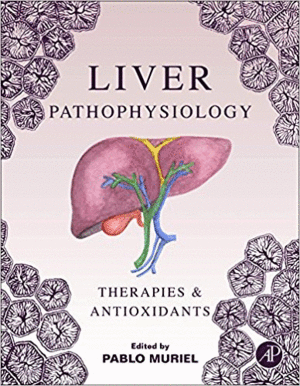
141,28 ۥ Section I. Introduction
Chapter 1. The Liver: General Aspects and Epidemiology
Chapter 2. Structure and Ultrastructure of the Normal and Diseased Liver
• Section II. Liver Pathophysiology
Chapter 3. Hepatic Apoptosis and Necrosis: Mechanisms and Clinical Relevance
Chapter 4. Autoimmune Hepatitis
Chapter 5. Pathogenesis of Idiosyncratic Drug Induced Liver Injury
Chapter 6. Acetaminophen
Chapter 7. Liver Regeneration
Chapter 8. Nitric Oxide in Liver Ischemia-Reperfusion Injury
Chapter 9. The Immune System and Viral Hepatitis
Chapter 10. The Pathophysiology of Alcoholic Liver Disease
Chapter 11. Cytokines in Steatohepatitis
Chapter 12. Redox Signaling in NASH
Chapter 13. Amebic Liver Abscess
Chapter 14. Role of Cytokines and Reactive Oxygen Species in the Amebic Liver Abscess Produced by Entamoeba histolytica
Chapter 15. Epigenetics in Liver Disease: Involvement of Oxidative Stress
Chapter 16. Role of Oxidative and Nitrosative Stress in Hepatic Fibrosis
Chapter 17. Oxidative and Nitrosative Stress in Chronic Cholestasis
Chapter 18. Cholestasis, Contraceptives, and Free Radicals
Chapter 19. Is Human Cirrhosis a Reversible Disease?
Chapter 20. Obesity and Hepatocellular Carcinoma
Chapter 21. Oxidative Stress as a Mechanism for Hepatocellular Carcinoma
Chapter 22. Nuclear Factor-Kappa B Actions During the Development of Hepatocellular Carcinoma
Chapter 23. The Role of Senescence in Hepatic Diseases
Chapter 24. Exercise, Liver Steatosis, and Free Radicals
Chapter 25. The Metabolic Syndrome, Oxidative Stress, and the Liver
Chapter 26. Liver Diseases in the Elderly
Chapter 27. Cytokines in Hepatic Injury
Chapter 28. Nrf2: A Key Regulator of Redox Signaling in Liver Diseases
Chapter 29. Redox Regulation by HGF/c-Met in Liver Disease
• Section III. Liver Metabolism
Chapter 30. Hepatic Metabolism in Liver Health and Disease
Chapter 31. Cytochrome P450 and Oxidative Stress in the Liver
Chapter 32. Drug Hepatic Clearance in Spinal Cord Injury
• Section IV. Cirrhosis and Its Complications
Chapter 33. Complications of Cirrhosis: Introduction
Chapter 34. Portal Hypertension-Molecular Mechanisms
Chapter 35. Gastroesophageal Varices
Chapter 36. Ascites
Chapter 37. Reactive Nitrogen and Oxygen Species in Hepatic Encephalopathy
Chapter 38. Hepatorenal Syndrome
Chapter 39. Hepatopulmonary Syndrome and Portopulmonary Hypertension
• Section V. Methods in Liver Disease
Chapter 40. Experimental Models of Liver Damage Mediated by Oxidative Stress
Chapter 41. Monitoring of Liver Fibrogenesis and Biochemical Diagnosis of Fibrosis
Chapter 42. In Vitro Models of HCC
• Section VI. Therapies in Liver Disease
Chapter 43. The Liver, Oxidative Stress, and Antioxidants
Chapter 44. Herbal Drugs on the Liver
Chapter 45. Silymarin for Liver Disease
Chapter 46. Naringenin and the Liver
Chapter 47. Antioxidant, Antiinflammatory, and Antifibrotic Properties of Quercetin in the Liver
Chapter 48. Coffee and the Liver
Chapter 49. Hepatoprotective Properties of Curcumin
Chapter 50. Retinoids in Liver Function
Chapter 51. Stevia as a Putative Hepatoprotector
Chapter 52. Are N-Acetylcysteine and Resveratrol Effective Treatments for Liver Disease?
Chapter 53. Does Nutrition Matter in Liver Disease?
Chapter 54. One-Carbon Metabolism in Liver Health and Disease
Chapter 55. Ursodeoxycholic Acid for the Treatment of Liver Diseases
Chapter 56. Current Treatment of Chronic Hepatitis C
Chapter 57. An Adenosine Derivative Compound as a Hepatoprotective Agent
Chapter 58. Nitric Oxide and the Liver
Chapter 59. Repopulation of Cirrhotic Liver by Hepatic Stem/Progenitor Cells: A Promising Strategy Alternative to Liver Transplantation
Chapter 60. Gene Therapy for Liver Disease
Chapter 61. Role of Oxidative Stress in Liver Transplantation
Features:
• Presents the most recent advances in hepatology, with a special focus on the role of oxidative stress in liver injury.
• Provides in vivo and in vitro models to study human liver pathology.
• Explains the beneficial effects of antioxidants on liver diseases.
• Contains the most recent and modern treatments of hepatic pathologies, including, but not limited to, stem cells repopulation, gene therapy and liver transplantation.
Author
Pablo Muriel, PhD, Researcher and Professor, Cinvestav-IPN, Mexico City, Mexico
 -5%
-5%
 -5%
-5%
 -5%
-5%
 -5%
-5%
 -5%
-5%
 -5%
-5%
 -5%
-5%
 -5%
-5%
 -5%
-5%
 -5%
-5%