Descuento:
-5%Antes:
Despues:
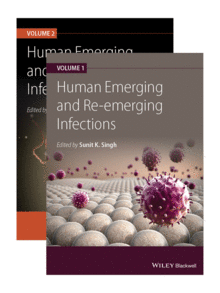
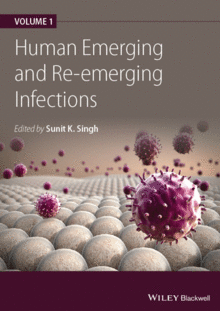
389,27 ۥ Volume I - Viral & Parasitic Infections
1 Pathogenesis of the OldWorld Arenaviruses in Humans 1
2 Pathogenesis of New World Arenaviruses in Humans 29
3 Pathogenesis of Emerging and Novel Bunyaviruses in Humans 43
4 Pathogenesis of Rift Valley Fever in Humans 73
5 Pathogenesis of Hantavirus Infections 95
6 Molecular Pathogenesis of Japanese Encephalitis Virus Infection 113
7 Dengue Virus Infection in Humans: Epidemiology Biology Pathogenesis and Clinical Aspects 125
8 Pathogenesis of West Nile Virus in Humans 145
9 Overview on Chikungunya Virus Pathogenesis 177
10 Nipah Virus Infections in Humans 189
11 Pathogenesis of Hendra Virus in Humans 207
12 Pathogenesis of Rotavirus in Humans 227
13 Pathogenesis of Papillomaviruses in Humans 243
14 Kaposi’s Sarcoma–Associated Herpesvirus Pathogenesis 265
15 Microsporidiosis in Humans 281
16 Pathogenesis of Toxoplasma gondii in Humans 303
17 Pathogenesis of Human African Trypanosomiasis 319
18 Pathogenesis of Leishmaniasis in Humans 337
19 Pathogenesis of Chagas Disease in Humans 349
20 Pathogenesis of Cryptosporidium in Humans 371
21 Pathogenesis of Malarial Parasites in Humans 393
22 Pathogenesis of Trichomonas vaginalis in Humans 423
23 Loa loa Pathogenesis in Humans 441
24 Nematode LarvaMigrans 453
25 Pathogenesis of Human Schistosomiasis 481
26 Vector-Borne Parasitic Zoonotic Infections in Humans 505
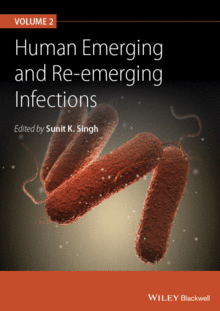
• Volume II - Bacterial & Mycotic Infections
27. Pathogenesis of Haemophilus influenzae in humans
29. Pathogenesis of Campylobacter jejuni in humans
29. Pathogenesis of Francisella tularensis in humans
30. Pathogenesis of Yersinia pestis in humans
31. Pathogenesis of Legionella pneumophila in humans
32. Pathogenesis of Kingella kingae in humans
33. Pathogenesis of Helicobacter pylori in humans
34. Pathogenesis of Chlamydia trachomatis in humans
35. Pathogenesis of Bordetella pertussis in humans
36. Pathogenesis of human Ehrlichioses
37. Neisseria gonorrhoea: the pathogen, diagnosis and antimicrobial resistance
38. Pathogenesis of Corynebacterium diphtheriae in humans
39. Pathogenesis of Staphylococcus aureus in humans
40. Pathogenesis of Listeriosis in humans
41. Pathogenesis and Management of Severe Bacillus anthracis Infection
42. Pathogenesis of Streptococcus in humans
43. Pathogenesis of Clostridium botulinum in humans
44. Pathogenesis of Mycobacterium ulcerans in humans
45. Challenges associated with drug resistance and diagnostics in Mycobacterium tuberculosis
46. Pathogenesis of Orientia tsutsugamushi in humans
47. Lyme borreliosis in humans
48. Emerging NDM carbapenemases and members of family of Enterobacteriaceae in humans.
49. Pathogenesis of Pathogenesis of Cryptococcosis in humans
50. Candida albicans: clinical relevance, pathogenesis and host immunity
51. Pathogenesis of Pneumocystis carinii pneumonia in humans
52. Pathogenesis of Aspergillosis in humans
Emerging and re-emerging pathogens pose several challenges to diagnosis, treatment, and public health surveillance, primarily because pathogen identification is a difficult and time-consuming process due to the “novel” nature of the agent. Proper identification requires a wide array of techniques, but the significance of these diagnostics is anticipated to increase with advances in newer molecular and nanobiotechnological interventions and health information technology.
Human Emerging and Re-emerging Infections covers the epidemiology, pathogenesis, diagnostics, clinical features, and public health risks posed by new viral and microbial infections. The book includes detailed coverage on the molecular mechanisms of pathogenesis, development of various diagnostic tools, diagnostic assays and their limitations, key research priorities, and new technologies in infection diagnostics. Volume 1 addresses viral and parasitic infections, while volume 2 delves into bacterial and mycotic infections.
Human Emerging and Re-emerging Infections is an invaluable resource for researchers in parasitologists, microbiology, Immunology, neurology and virology, as well as clinicians and students interested in understanding the current knowledge and future directions of infectious diseases.
Author
Sunit K. Singh, Ph.D is an Associate Professor (Molecular Immunology) in the Molecular Biology Unit, Faculty of Medicine, Institute of Medical Sciences , Banaras Hindu University (BHU), Varanasi, India.
 -5%
-5%
 -5%
-5%
 -5%
-5%
 -5%
-5%
 -5%
-5%
 -5%
-5%
 -5%
-5%
 -5%
-5%
 -5%
-5%
 -5%
-5%
 -5%
-5%
 -5%
-5%
 -5%
-5%