BAST, R. C.; CROE, R.; HAIT, W.; HONG, W.; KUFE, D.; PICCART-GEBHART, M.; POLLOCK, R.
Descuento:
-5%Antes:
Despues:
247,00 ۥ Part 1: INTRODUCTION
1 Cardinal manifestations of cancer
2 Biological hallmarks of cancer
• Part 2: TUMOR BIOLOGY
3 Technologies and Models to Study Cancer
4 Oncogenes
5 Tumor suppressor genes
6 Epigenetic contributions to human cancer
7 Cancer genomics and evolution
8 Chromosomal Abberations in Human Cancer
9 MicroRNA expression in cancer
10 Aberrant signaling pathways in cancer
11 Differentiation therapy
12 Cancer stem cells
13 Cancer Cell Death
14 Cancer cell immortality: targeting telomerase
15 Cancer metabolism
16 Modeling therapy of late or early-stage metastatic disease in mice
17 Tumor angiogenesis
• Part 3: QUANTITATIVE ONCOLOGY
18 Cancer bioinformatics
19 Systems biology and genomics
20 Statistical innovations in cancer research
21 Biomarker-based clinical trial design in the era of genomic medicine
22 Clinical informatics
• Part 4: CARCINOGENESIS
23 Chemical carcinogenesis
24 Endocrine and genetic bases of hormone-related cancers
25 Ionizing radiation
26 Ultraviolet radiation carcinogenesis
27 Inflammation and cancer
28 RNA tumor viruses
29 Herpesviruses
30 Papillomaviruses and cervical neoplasia
31 Hepatitis viruses and hepatoma
32 Parasites
• Part 5: EPIDEMIOLOGY, PREVENTION AND DETECTION
33 The burden of cancer worldwide: current and future perspectives
34 Cancer epidemiology
35 Behavioral approaches to cancer prevention
36 Diet and nutrition in the etiology and prevention of cancer
37 Chemoprevention of cancer
38 Cancer Screening and Early Detection
• Part 6: CLINICAL DISCIPLINES
39 Nexgen Pathology: Predicting clinical course and targeting disease causation
40 Molecular diagnostics in cancer
41 Principles of Conventional and Molecular Imaging
42 Interventional Radiology for the Cancer Patient
43 Principles of Surgical Oncology
44 Principles of radiation oncology
45 Principles of Medical Oncology
46 Palliative care
47 Principles of psycho-oncology
48 Principles of cancer rehabilitation medicine
49 Integrative oncology in cancer care
50 Health services research
• Part 7: INDIVIDUALIZED TREATMENT
51 Personalized Medicine in Oncology Drug Development
• Part 8: CHEMOTHERAPY
52 Preclinical and early clinical development of chemotherapeutic drugs, mechanism-based agents and biologics
53 Tumor growth kinetics
54 Principles of Dose, Schedule, and Combination Chemotherapy
55 Pharmacology
56 Folate Antagonists
57 Pyrimidine and purine antimetabolites
58 Alkylating agents and platinum antitumor compounds
59 DNA topoisomerase targeting drugs
60 Microtubule-Targeting Natural Products
61 Endocrine therapy for hormone receptor positive breast cancer
62 Drug resistance and its clinical circumvention
• Part 9: BIOLOGICAL AND GENE THERAPY
63 Cytokines, interferons, and hematopoietic growth factors
64 Monoclonal serotherapy
65 Vaccines and immunostimulants
66 Cell-based cancer immunotherapy
67 Cancer immunotherapy
68 Cancer gene therapy
69 Cancer nanotechnology
70 Hematopoietic cell transplantation
• Part 10: SPECIAL POPULATIONS
71 Principles of pediatric oncology
72 Cancer and pregnancy
73 Cancer and aging
74 Disparities in Cancer Care
75 Immunoeffeciently related cancers
76 Cancer survivorship: new challenge in cancer medicine
• Part 11: DISEASE SITES
77 Primary and metastatic neoplasms of the brain in adults
78 Neoplasms of the eye
79 Neoplasms of the endocrine glands
80 Neoplasms of the thyroid
81 Neoplasms of the Adrenal Cortex
82 Tumors of the diffuse neuroendocrine and gastroenteropancreatic system
83 Neoplasms of the head and neck
84 Cancer of the Lung
85 Malignant pleural mesothelioma
86 Thymomas andThymic Tumors
87 Tumors of the heart and great vessels
88 Primary germ cell tumors of the thorax
89 Neoplasms of the Esophagus
90 Carcinoma of the Stomach
91 Primary neoplasms of the liver
92 Gallbladder and Bile Duct Cancer
93 Neoplasms of the Exocrine Pancreas
94 Neoplasms of the colon, small intestine, vermiform appendix and peritoneum
95 Neoplasms of the anus
96 Renal cell carcinoma
97 Urothelial Cancer
98 Neoplasms of the Prostate
99 Tumors of the penis and urethra
1 Testis cancer
101 Cancer of the vulva and vagina
102 Neoplasms of the cervix
103 Endometrial cancer
104 Epithelial ovarian, fallopian tube, and peritoneal cancer
105 Nonepithelial Ovarian Malignancies
106 Molar pregnancy and gestational trophoblastic neoplasia
107 Gynecologic sarcomas
108 Neoplasms of the Breast
109 Malignant Melanoma
110 Other skin cancers
111 Bone Tumors
112 Soft Tissue Sarcomas
113 The Myelodyplastic Syndrome
114 Acute Myeloid Leukemia in Adults: Mast Cell Leukemia and Other Mast Cell Neoplasms
115 Chronic myeloid leukemia
116 Acute lymphoblastic leukemia
117 Chronic Lymphocytic Leukemia and Hairy Cell Leukemia
118 Hodgkin lymphoma
119 Non-Hodgkin Lymphoma
120 Mycosis fungoides and Sèzary syndrome
121 Plasma Cell Tumors
122 Myeloproliferative Neoplasms: Essential Thrombocythemia, Primary Myelofibrosis and Polycythemia Vera
123 Neoplasms of Unknown Primary Site
• Part 12: MANAGEMENT OF CANCER COMPLICATIONS
124 Anorexia and cachexia
125 Antiemetic Therapy
126 Neurologic complications of cancer
127 Dermatologic Complications of Cancer Chemotherapy
128 Skeletal complications
129 Hematologic complications and blood bank support
130 Coagulopathic complications of cancer patients
131 Urologic complications
132 Cardiac Complications
133 Respiratory Complications
134 Gastrointestinal and hepatic complications in cancer patients
135 Oral complications of cancer and their treatment
136 Gonadal complications
137 Sexual dysfunction
138 Endocrine complications and paraneoplastic syndromes
139 Infections in patients with cancer
140 Oncologic emergencies
• Part 13: THE FUTURE OF ONCOLOGY
141 A vision for 21st century healthcare
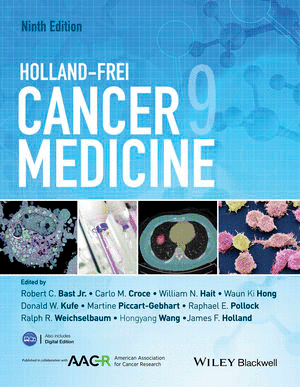
Holland-Frei Cancer Medicine, Ninth Edition, offers a balanced view of the most current knowledge of cancer science and clinical oncology practice. This all-new edition is the consummate reference source for medical oncologists, radiation oncologists, internists, surgical oncologists, and others who treat cancer patients.
Features
• A translational perspective throughout, integrating cancer biology with cancer management providing an in depth understanding of the disease
• An emphasis on multidisciplinary, research-driven patient care to improve outcomes and optimal use of all appropriate therapies
• Cutting-edge coverage of personalized cancer care, including molecular diagnostics and therapeutics
• Concise, readable, clinically relevant text with algorithms, guidelines and insight into the use of both conventional and novel drugs
Author Information
• Robert C. Bast Jr, MD, Vice President for Translational Research, MD Anderson Cancer Center, Houston, TX, USA
• Carlo M. Croce, MD, Distinguished University Professor, The John W. Wolfe Chair in Human Cancer Genetics, Professor and Chair, Department of Molecular Virology, Immunology and Medical Genetics, The Wexner Medical Center, The Ohio State University, Columbus, OH, USA
• William Hait, MD, PhD, Global Head research and Development, Janssen pharmaceutical companies of Johnson and Johnson, NJ, USA
• Waun Ki Hong, MD, DMSc, Professor of Thoracic/Head and Neck Medical Oncology, American Cancer Society Professor, Samsung Distinguished University Chair in Cancer Medicine Emeritus, The University of Texas M.D.Anderson Cancer Center, Houston, TX, USA
• Donald W. Kufe, MD, Distinguished Physician, Dana-Farber Cancer Institute, Professor of Medicine
Harvard Medical School, Leader, Translational Pharmacology and Early Therapeutic Trials Program
Dana-Farber/Harvard Cancer Center, Boston, MA, USA
• Martine Piccart-Gebhart MD PhD, Professor of Oncology, Université Libre de Bruxelles (ULB), Head of the Medicine Department, Jules Bordet Institute, Brussels, Belgium
• Raphael E. Pollock, MD, PhD, FACS, Professor and Director, Division of Surgical Oncology, Surgeon in Chief, James Comprehensive Cancer Center, Surgeon in Chief, The Ohio State University Health System, The Ohio State University Wexner Medical Center, Columbus, OH, USA
• Ralph R. Weichselbaum, MD, Daniel K. Ludwig Professor Chair Dept of Radiology and Cellular Oncology University of Chicago Hospital Director Chicago Tumor Institute, IL, USA
• Dr Hongyang Wang, Professor and Director, National Center for Liver Cancer, China; and Eastern Hepatobiliary Surgery Hospital, Shanghai, China
• James F. Holland, MD, ScD (hc), Distinguished Professor of Neoplastic Diseases, Director Emeritus of Derald H.Rutttenberg Cancer Center, Icahn School of Medicine at Mount Sinai, New York, NY, USA
 -5%
-5%
 -5%
-5%
 -5%
-5%
 -5%
-5%
 -5%
-5%
 -5%
-5%
 -5%
-5%
 -5%
-5%
 -5%
-5%
 -5%
-5%