Descuento:
-5%Antes:
Despues:
296,40 €PART I VASCULAR IMAGING TECHNIQUES AND PHYSIOLOGIC TESTING
1. Arterial and Venous Duplex Scanning
2. Duplex Arteriography for Lower Extremity Revascularization
3. Fundamentals of Angiography
4. Arteriographic Patterns of Atherosclerotic Occlusive Disease of the Lower Extremity
5. Computed Tomography in Vascular Disease
6. Magnetic Resonance Angiography
7. Intravascular Ultrasound Imaging
PART II BASIC SCIENCE IN VASCULAR DISEASES
8. Hemodynamics of Vascular Disease: Applications to Diagnosis and Treatment
9. Atherosclerosis: Biological and Surgical Considerations
10. Neointimal Hyperplasia: Basic Considerations
11. Therapeutic Angiogenesis
12. Thrombogenesis and Thrombolysis
13. Etiology of Abdominal Aortic Aneurysms
14. An Evidence-based Approach to Cardiopulmonary Risk Assessment for Vascular Surgery Procedures
PART III BASIC OPEN VASCULAR TECHNIQUES
15. Vascular Sutures and Anastomoses
16. Patch-graft Angioplasty
17. Endarterectomy
18. Balloon Angioplasty of Peripheral Arteries and Veins
19. Stents for Peripheral Arteries and Veins
20. Thrombolytic Therapy for Peripheral Arterial and Venous Thrombosis
PART IV OPEN SURGICAL EXPOSURE OF ARTERIES
21. Exposure of the Carotid Artery
22. The Vertebrobasilar System: Anatomy and Surgical Exposure
23. Trans-sternal Exposure of the Great Vessels of the Aortic Arch
24. Extrathoracic Surgical Exposure for Distal Revascularization of Brachiocephalic Branches
25. Open Surgical Exposure of Upper Extremity Arteries
26. Transperitoneal Exposure of Abdominal Aorta and Iliac Arteries
27. Retroperitoneal Exposure of Abdominal Aorta
28. Retroperitoneal Exposure of Iliac Arteries
29. Open Surgical Exposures of Arteries in the Lower Extremity
PART V CEREBROVASCULAR INSUFFICIENCY
30. Medical Management of Carotid Artery Disease
31. Carotid Endarterectomy: Indications, Techniques, and Results
32. Eversion Carotid Endarterectomy
33. Carotid Stenting: Indications, Techniques, and Results
34. Cerebral Protection Devices During Carotid Stenting
35. Vertebrobasilar Disease: Surgical Management
36. Nonatherosclerotic Cerebrovascular Disease
PART VI AORTIC AND ILIAC ANEURYSMS
37. Indications, Techniques and Results of Open Repair of Ascending and Transverse Aortic Arch Aneurysms
38. Hybrid Repair of Aortic Arch Aneurysms
39. Endovascular Management of Thoracic Aortic Aneurysms and Dissections
40. Open Repair of Thoracoabdominal Aortic Aneurysms
41. Open Repair of Abdominal Aortic Aneurysms
42. Endovascular Repair of Infrarenal Abdominal Aortic Aneurysms
43. Fenestrated and Branched Stent Grafts for the Treatment of Complex Aortic Aneurysms
44. Endovascular Treatment of Ruptured Infrarenal Aortic and Iliac Aneurysms
45. Open Surgical Treatment of Isolated Iliac Aneurysms
46. Endovascular Grafts in the Treatment of Isolated Iliac Aneurysms
47. Infected Aortic Grafts: General Considerations and Techniques
48. Para-anastomotic Aortic Aneurysms: General Considerations and Techniques
PART VII VISCERAL VESSELS
49. Surgery of the Celiac Artery for Occlusive Disease and Arcuate Ligament Syndrome
50. Management of Acute and Chronic Mesenteric Ischemia
51. Endovascular Treatment of Mesenteric Occlusive Disease
52. Renal Artery Revascularization
53. Renal Artery Fibrodysplasia and Renovascular Hypertension
54. Visceral Artery Aneurysms
PART VIII LOWER EXTREMITY OCCLUSIVE AND NON-OCCLUSIVE ARTERIAL DISEASE
55. Acute Arterial Occlusion of the Lower Extremities
56. Aortoiliac Occlusive Disease
57. Endovascular Treatment of Aortoiliac Artery Stenosis and Occlusions
58. Infrainguinal Arterial Disease
59. Bypasses to Plantar Arteries and Other Branches of Tibial Arteries
60. Role of Surgical Options for Critical Lower Limb Ischemia
61. Adjuvant Surgical Techniques for Limb Salvage
62. Endovascular Treatment of Infrapopliteal Arteries
63. Popliteal Artery Aneurysms
64. Endovascular Treatment of Popliteal Artery Aneurysms: The Role of Stent-Grafts and Thrombolysis
65. Duplex-guided Balloon Angioplasty for Infrainguinal Arterial Occlusive and Aneurysmal Disease
66. Extra-anatomic Bypasses
67. Infected Extracavitary Prosthetic Grafts
68. Popliteal Entrapment and Chronic Compartment Syndrome: Unusual Causes for Claudication in Young Adults
69. Lumbar Sympathectomy: Current Indications and Techniques
70. Nonatherosclerotic Diseases of Small Arteries
71. Intraoperative Assessment and Postoperative Surveillance of Vascular Reconstructions
PART IX VASCULAR TRAUMA
72. Vascular Trauma
73. Ankle and Foot Fasciotomy for Compartment Syndrome of the Foot
74. Post-Traumatic Pain Syndrome: Complex Regional Pain Syndrome
PART X UPPER EXTREMITY VASCULAR DISEASE
75. Vasospastic Disease of the Upper Extremity: Primary Raynaud""s Syndrome
76. Arterial Surgery of the Upper Extremity
77. Neurogenic Thoracic Outlet Syndrome and Pectoralis Minor Syndrome
78. Venous Thoracic Outlet Syndrome
79. Arterial Thoracic Outlet Syndrome
80. Upper Thoracic Sympathectomy: Conventional Technique
81. Thoracoscopic Sympathectomy
PART XI ARTERIAL-VENOUS MALFORMATION, ACCESS FOR HEMODIALYSIS AND PORTAL HYPERTENSION
82. Arteriovenous Fistulas and Vascular Malformations
83. Vascular Access for Dialysis
84. Portal Hypertension
85. Endovascular Treatment of Portal Hypertension
PART XII VENOUS AND LYMPHATIC DISORDERS
86. Clinical Application of Objective Testing in Venous Insufficiency
87. Varicose Veins
88. Superficial Thrombophlebitis
89. Acute Deep Vein Thrombosis and Contemporary Venous Thrombectomy
90. Acute Upper Extremity Deep Venous Thrombosis
91. Vena Cava Filters
92. Repair of Iliac and Iliocaval Venous Obstructions
93. Ablation of Major Incompetent Superficial Veins
94. Management of Perforator-vein Incompetence
95. Ischemic Venous Thrombosis: Phlegmasia Cerulea Dolens and Venous Gangrene
96. Diagnosis and Management of Lymphedema
PART XIII AMPUTATIONS AND REHABILITATION
97. Amputation of the Lower Extremity: General Considerations
98. Major Amputations
99. Postoperative and Preprosthetic Management for Lower Extremity Amputations
100. Prosthetic Fitting and Management of Lower Extremity Amputees
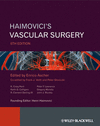
The role of the vascular surgeon has evolved. Vascular surgeons now perform minimally invasive vascular procedures and provide comprehensive care in addition to open surgery.
Haimovici""s Vascular Surgery, now in its 6th edition, has been extensively updated to provide you with:
- Expert perspectives on how the vascular surgery field has evolved so you continue to stay on the leading edge of this dynamic field
- Concise and practical advice about what these changes and new areas of practice mean to you - the practitioner and trainee in the fields of vascular surgery, interventional cardiology and interventional radiology
- Fundamental principles and best practices to treat traditional and new modalities that are now part of the vascular surgeons purview
What""s new in this edition?
- Full-color photographs and illustrations
- Complete coverage of the latest diagnostic imaging modalities, including intravascular ultrasound and computed tomography
- Expanded information on the most effective minimally invasive treatment options, including those for diseases of the carotid artery, lower extremity and abdominal aorta
- Full coverage of non-surgical techniques that vascular surgeons may add to their repertoire
Time-saving feature exclusive to the 6th edition
To help you identify actionable information quickly, each chapter now highlights the most relevant clinical information. Apply what you learn to your own practice immediately.
Author
Dr. Enrico Ascher is Director of the Vascular Division at Maimonides Medical Center and Professor of Surgery at Mount Sinai Medical School. He is Chairman of the Vascular Institute of New York® at Maimonides Medical Center, one of the largest vascular centers in the United States. Additionally, he is program director of the ACGME accredited Vascular Fellowship Program at Maimonides.
Dr. Ascher is a member American Surgical Association. He is past president of the Society for Vascular Surgery,Society for Clinical Vascular Surgery, Eastern Vascular Society and New York Cardiovascular Society. Dr. Ascher is the founder of the Pan American Congress on Vascular and Endovascular Surgery which provides a bi-annual forum for surgeons and interventionalists from South America, Central America and North America to interact. He also has created and directed the Vascular Fellows Competition for the last 25 years.
He is a frequent lecturer to professional societies and medical school faculties throughout the world. Dr. Ascher is engaged in uniting the specialty of vascular surgery and expanding its frontiers. Currently, he and his team are developing less invasive alternatives to perform balloon angioplasties and stenting using ultrasound guided techniques.
Dr. Ascher continues to be involved with the Society for Vascular Surgery. He founded and is President Elect of the Association of Chairs in Vascular Surgery allowing leaders in vascular surgery to develop new strategies and strengthen their services. He is of the Internationals Relations Committee and the World Federation of Vascular Surgeons.
Dr. Ascher has contributed over 250 articles to leading journals of vascular surgery and is the author of over 65 textbook chapters. He is the Editor-in-Chief of Haimovici's Vascular Surgery: Principles and Techniques, 5th edition and is currently formulating the 6th
 -5%
-5%
 -5%
-5%
 -5%
-5%
 -5%
-5%
 -5%
-5%
 -5%
-5%
 -5%
-5%
 -5%
-5%
 -5%
-5%
 -5%
-5%