Descuento:
-5%Antes:
Despues:
93,86 €1. Ocular Hypertension/Glaucoma in Minipigs: Episcleral Veins Cauterization and Microbead Occlusion Methods
2. Use of Animal Models and Techniques in Glaucoma Research: Introduction
3. Quantification of Scleral Biomechanics and Collagen Fiber Alignment
4. In Vitro and In Vivo Methods for Studying Retinal Ganglion Cell Survival and Optic Nerve Regeneration
5. Utilizing RNA-Seq to Identify Differentially Expressed Genes in Glaucoma Model Tissues, Such as the Rodent Optic Nerve Head
6. Single-Cell Dissociation and Characterization in the Murine Retina and Optic Nerve
7. Assessment of Aqueous Humor Dynamics in the Rodent by Constant Flow Infusion
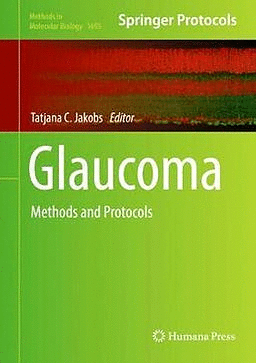
This detailed volume introduces the reader to current methods in glaucoma research, in particular those that make use of animal disease models. Given that the retinal ganglion cells damaged and destroyed by glaucoma do not regenerate after lowering the intraocular pressure, new therapeutic approaches that protect ganglion cells directly is a vital research goal that this volume’s contents aim to aid scientists in developing. Written in the highly successful Methods in Molecular Biology series format, chapters include introductions to their respective topics, lists of the necessary materials and reagents, step-by-step, readily reproducible laboratory protocols, and tips on troubleshooting and avoiding known pitfalls.
Authoritative and practical, Glaucoma: Methods and Protocols serves as a useful guide for both ophthalmologists in clinical practice and researchers in the field.
Features
• Includes cutting-edge methods and protocols for the study of glaucoma
• Provides step-by-step detail essential for reproducible results
• Contains key notes and implementation advice from the experts
 -5%
-5%
 -5%
-5%
 -5%
-5%
 -5%
-5%
 -5%
-5%
 -5%
-5%
 -5%
-5%
 -5%
-5%
 -5%
-5%
 -5%
-5%