Descuento:
-5%Antes:
Despues:
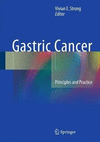
177,83 €This volume provides the most comprehensive and complete resource available on all aspects of gastric cancer and it’s management. The book covers topics such as oncologic approaches to staging, treating, and following patients, filling a critical need for resource materials on these areas. As multidisciplinary care is an integral part of gastric cancer treatment, this text is unique in including a renowned group of expert authors from a variety of disciplines, including pathology, gastroenterology, medical oncology, surgery and clinical genetics. In addition, authors from an international pool of gastric cancer experts have covered the breadth of practice and understanding globally.
Edited and organized by an expert from one of the most highly respected cancer institutions in the country, Gastric Cancer: Principles and Practice is an expert review of this field, serving as a valuable reference for physicians in training and in practice, as well as for researchers who are interested in the scope of issues and advances in this important malignancy.
Authors
Dr. Vivian E. Strong's institution, Memorial Sloan-Kettering Cancer Center is the highest volume referral center in the United States and as such, has ample and substantive weight in the presentation of this important disease process. Dr. Strong personally performs most of the gastric cancer operations at MSKCC and has the highest volume of any surgeon in the United States in the surgical treatment of gastric cancer.
Vivian E. Strong, MD, FACS
Associate Professor of Surgery, Weill Medical College of Cornell University, Associate Attending Surgeon, Memorial Sloan Kettering Cancer Center, Gastric and Mixed Tumor Service, Department of Surgery, New York, NY, USA
Table of contents (24 chapter)
1.The Historical Perspective of Gastric Cancer
2.Epidemiology of Gastric Cancer
3.Molecular Mechanisms in Gastric Carcinogenesis
4.Pathology of Gastric Cancer
5.Role of HER2 in Gastric Cancers
6.Pathophysiology of Hereditary Diffuse Gastric Cancer
7.Western Perspective and Epidemiology of Gastric Cancer
8.Diagnosis, Staging, and Workup of Gastric Cancer
9.Endoscopy and Endoscopic Ultrasound Examination of the Stomach
10.The Role of Staging Laparoscopy and Peritoneal Cytology in Gastric Cancer
11.Endoscopic Resection for Gastric Cancer
12.Methods of Reconstruction—BI, BII, Roux-en-Y, Jejunal Interposition, Proximal Gastrectomy and Pouch Reconstruction
13.Lymphadenectomy—D1, D2, and D3
14.Open Methods of Resection and Reconstruction for Subtotal and Total Gastrectomy
15.Laparoscopic Methods of Resection and Reconstruction for Subtotal and Total Gastrectomy with D2 Lymphadenectomy
16.Robotic Methods of Resection and Reconstruction for Subtotal and Total Gastrectomy with D2 Lymphadenectomy
17.Managing Early and Late Postoperative Complications Following Gastric Surgery
18.Hereditary Diffuse Gastric Cancer
19.Surveillance After Gastric Resection
20.Surgical Trials for Gastric Cancer
21.Neoadjuvant and Adjuvant Treatment—Strategies and Clinical Trials—Western Perspective
22.Adjuvant and Neoadjuvant Treatment: Standard Treatment and Clinical Trials in the East
23.Radiation Treatment for Gastric Cancer
24.Targeted Therapy and Novel Agents for the Treatment of Gastric Cancer: A View Toward the Future
 -5%
-5%
 -5%
-5%
 -5%
-5%
 -5%
-5%
 -5%
-5%
 -5%
-5%
 -5%
-5%
 -5%
-5%
 -5%
-5%
 -5%
-5%