Descuento:
-5%Antes:
Despues:
71,14 €Chapter 1: Why you need a forensic psychiatrist
Chapter 2: What is psychiatry?
Chapter 3: Applications of psychiatry to law
Chapter 4: The Mental Status Examination
Chapter 5: Common psychiatric diagnoses
Chapter 6: Bad vs. Mad
Chapter 7: Critical concept in competency
Chapter 8: Treatable disorders vs brain damage
Chapter 9: Medical problems
Chapter 10: Hearing voices
Chapter 11: Your Expert Witness
Chapter 12: Summary and conclusions
Glossary of Terms
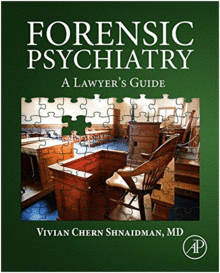
Forensic psychiatry is the branch of psychiatry that deals with issues arising in the interface between psychiatry and the law, and with the flow of mentally disordered offenders along a continuum of social systems. Modern forensic psychiatry has benefited from four key developments: the evolution in the understanding and appreciation of the relationship between mental illness and criminality; the evolution of the legal tests to define legal insanity; the new methodologies for the treatment of mental conditions providing alternatives to custodial care; and the changes in attitudes and perceptions of mental illness among the public. More than half of all inmates in U.S. prisons are reported to be mentally ill. In fact, prisons are currently the primary providers of psychiatric treatment in this country. There are over one million active lawyers in the United States and a good portion of their cases and clients include some reference to psychiatry or mental illness. Frequently they encounter clients and/or cases of substance abuse, psychopathy, sexual offenses, learning disorders, birth defects and other behavioral issues and they are ill-prepared to understand the nature of the psychiatric report, how the assessment was structured and how to best challenge it in court. This volume will assist lawyers in identifying mentally ill clients and aid them in deciphering psychiatric information and language in reports and testimony. Coverage will range from why a forensic psychiatrist is necessary, to applications of psychiatry to law, to differentiating disorders and the expert witness. Forensic Psychiatry: A Lawyer's Guide will fill a gap not satisfied by any other single work on the market and also fits well strategically in broadening the professional titles offered on the forensic list.
KEY FEATURES
• A user-friendly roadmap to psychiatry for the non-psychiatrist — covers why you need a forensic psychiatrist and the applications of psychiatry to law
• Provides coverage of the mental status examination, common psychiatric diagnoses, treatable disorders versus brain damage, medical problems masquerading as mental illness, and much more
• Includes a glossary of psychiatric terms
Author
Vivian Shnaidman, Jersey Forensic Consulting, LLC and Rutgers University, New Brunswick, NJ, USA
 -5%
-5%
 -5%
-5%
 -5%
-5%
 -5%
-5%
 -5%
-5%
 -5%
-5%
 -5%
-5%
 -5%
-5%
 -5%
-5%
 -5%
-5%