Descuento:
-5%Antes:
Despues:
167,95 €- The gold standard of critical care handbooks
- Streamlined and updated
- Exceptionally clear and easy to read
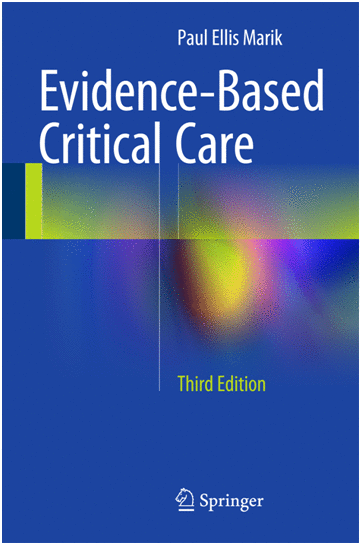
This is the premier evidence-based textbook in critical care medicine. The Third Edition features updated and revised chapters, numerous new references, streamlined content, and new chapters on key topics such as the new paradigm in critical care medicine, cardiac output monitoring, surgical optimization, vital signs, and arterial blood gas analysis. The book maintains the author’s trademark humor and engaging writing style and is suitable for a broad and diverse audience of medical students, residents, fellows, physicians, nurses, and respiratory therapists who seek the latest and best evidence in critical care.
From reviews of previous editions:
“This is an excellent introduction to the concept of evidence-based medicine...The writing is clear, logical, and highly organized, which makes for fast and enjoyable reading. I believe this book will get daily use in most intensive care units, by a wide range of readers.” –Respiratory Care
“This is one of the most comprehensive handbooks on critical care medicine with a strong emphasis on evidence base…Overall, this book should be useful for junior doctors or intensive care trainees who are starting their term in an intensive care unit.” –Anaesthesia and Intensive Care
Content Level » Professional/practitioner
Keywords » ICU - anesthesiology - critical care - emergency medicine - evidence-based - intensive care - perioperative
Related subjects » Anesthesiology - Critical Care & Emergency Medicine
Author
Paul Ellis Marik. Professor and Division Chief. Division of Pulmonary and Critical Care Medicine. Eastern Virginia Medical School. Norfolk, VA, USA.
Table of contents (52 chapters)
1.Evidence Based Critical Care
2. “Less Is More”: The New Paradigm in Critical Care
3. “Classic” Papers
4.Critical Care Medicine 101
5.House Officers Guidelines 1: Housekeeping
6.House Officers Guidelines 2: Procedures
7.Admission-Discharge Criteria
8.Chronic Critical Illness and the Long Term Sequela of Critical Care
9.Fluid Responsiveness and Fluid Resuscitation
10.Assessment of Cardiac Function and Cardiac Output
11.Peri-operative Fluid Optimization
12.Sepsis
13.The Stress Response, Stress Hyperglycemia and Stress Hyperlactemia
14.Understanding the Vital Signs: BP, HR, RR, TEMP, SaO
15.Management of Pain, Agitation and Delirium
16.Hospital Acquired Infections and Their Prevention
17.The Bacterial Pneumonias: A New Treatment Paradigm
18.Fever
19.Mechanical Ventilation 101
20.Non-invasive Ventilation
21.Liberation (Weaning from Mechanical Ventilation)
22.Arterial Blood Gas Analysis
23.ARDS
24.COPD Exacerbation
25.Acute Severe Asthma
26.Pleural Effusions and Atelectasis
27.Venous Thromboembolic Disease: DVT and PE
28.Hypertensive Crises
29.Acute Decompensated Cardiac Failure
30.Acute Coronary Syndromes
31.Arrhythmias
32.Nutrition in the ICU: It’s Whey Cool
33.Stress Ulcer Prophylaxis
34.Acute and Chronic Liver Disease
35.GI Bleeding
36.Pancreatitis
37.Diarrhea & Constipation
38.Transfusion of Blood and Blood Products
39.Adrenal Insufficiency
40.Electrolyte Disturbances
41.Acute Kidney Injury
42.Acute Ischemic Stroke
43.Intracerebral and Subarachnoid Hemorrhage
44.Seizures & Status Epilepticus
45.Toxicology
46.Alcohol Withdrawal Syndrome
47.Pregnancy Related Disorders
48.The Geriatric ICU Patient
49.Obesity in the ICU
50.Radiology
51.End-of-Life Issues
52.Words of Wisdom
 -5%
-5%
 -5%
-5%
 -5%
-5%
 -5%
-5%
 -5%
-5%
 -5%
-5%
 -5%
-5%
 -5%
-5%
 -5%
-5%
 -5%
-5%