Descuento:
-5%Antes:
Despues:
211,43 €1. Cardiac Arrest Management
2. Post- Cardiac Arrest Management
3. Undifferentiated Shock
4. Hypovolemic Shock and Massive Transfusion
5. Acute Respiratory Failure - NIV Implementation and Intubation
6. Diagnosis and Management of Tricyclic Antidepressant Ingestion
7. Management of Calcium Channel Blocker Poisoning
8. Diagnosis and Management of Ethylene Glycol Ingestion
9. Accidental Hypothermia
10. Management of Cardiogenic Shock
11. Management of Acute Heart Failure
12. Management of Acute Coronary Syndrome
13. Complications of Myocardial Infarction
14. Management of Cardiac Tamponade
15. Hypertensive Crises
16. Atrial Fibrillation and Other Supraventricular Tachycardias
17. Ventricular Arrhythmias
18. Management of Acute Aortic Syndromes
19. Management of Endocarditis
20. Community Acquired Pneumonia
21. Management of Acute Respiratory Distress Syndrome
22. Acute Exacerbation of COPD: Non-Invasive Positive Pressure Ventilation
23. Management of Status Asthmaticus
24. Immunocompromised Pneumonia
25. Venous Thromboembolism in the Intensive Care Unit
26. Massive Hemoptysis
27. Sedation and Delirium
28. Prolonged Mechanical Ventilation
29. Ventilator-Associated Pneumonia and Other Complications
30. Respiratory Failure in a Patient with Idiopathic Pulmonary Fibrosis
31. Weaning from Mechanical Ventilation
32. The Post-Intensive Care Syndrome
33. Management of Decompensated Right Ventricular Failure in the Intensive Care Unit
34. Diffuse Alveolar Hemorrhage
35. Acute Stroke Emergency Management
36. Bacterial Meningitis in the ICU
37. Management of Intracerebral Hemorrhage
38. Status Epilepticus
39. Neuroleptic Malignant Syndrome
40. Traumatic Brain Injury
41. Management of Anoxic Brain Injury
42. Traditional and Novel Tools for Diagnosis of Acute Kidney Injury
43. Management of Acute Kidney Injury
44. Rhabdomyolysis
45. Hyponatremia
46. Management of Severe Hyponatremia and SIADH
47. Diabetic Ketoacidosis
48. Thyroid Storm
49. Adrenal Insufficiency
50. Management of Hyperglycemic Hyperosmolar Syndrome
51. Management of Myxedema Coma
52. Urosepsis
53. Management of Sepsis and Septic Shock
54. Invasive Aspergillus
55. Management of Strongyloides Hyperinfection Syndrome
56. Treatment of Viral Hemorrhagic Fever in a Well-Resourced Environment
57. Management of Severe Malaria
58. Dengue
59. Chikungunya
60. Leptospirosis
61. Management of Acute Upper Gastrointestinal Hemorrhage
62. Variceal Hemorrhage
63. Acute Pancreatitis
64. Management of Acute Liver Failure
65. Acute Lower Gastrointestinal Bleeding
66. Diagnosis and Management of Clostridium Difficile Infection (CDI)
67. Principles of Nutrition in the Critically Ill Patient
68. Spontaneous Bacterial Peritonitis
69. ICU Management of the Patient with Alcoholic Liver Disease
70. Diagnosis and Management of Thrombotic
71. Thrombocytopenic Purpura
72. Acute Leukemia Presentation with DIC
73. Disseminated Intravascular Coagulation
74. Hemophagocytic Lymphohistiocytosis
75. ICU Complications of Hematopoietic Stem Cell
76. Transplantation Including Graft vs. Host Disease
77. Tumor Lysis Syndrome
78. Management of Hyperviscosity Syndromes
79. Thoracic Trauma
80. Blunt Abdominal Trauma
81. Abdominal Sepsis and Complicated Intraabdominal Infection
82. Intestinal Obstruction: Small and Large Bowel
83. Management of Acute Compartment Syndrome
84. Extracorporeal Membrane Oxygenation (ECMO) and Extracorporeal CO2 Removal (ECCO2R)
85. Management of Acute Thermal Injury
86. Acute Arterial Ischemia
87. Management of Necrotizing Soft Tissue Infection
88. Biliary Infections
89. Peripartum Cardiomyopathy
90. Management of Amniotic
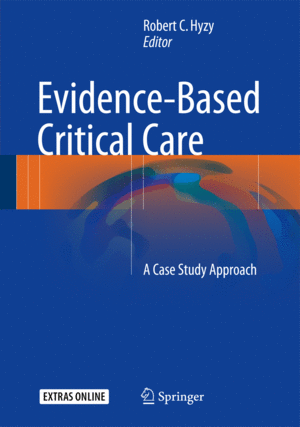
This book provides learners with a unique opportunity by virtue of the format outlined above. Each case presentation has a case vignette, which leads up to an important clinical question, and is followed by additional discussion which resolves the question posed. This is a new way to present knowledge in a medical book and should help critical care practitioners, fellows, residents, allied health professionals and students expand their critical care knowledge in an efficient and effective manner. This approach should also benefit those preparing for board examinations.
Features
• Case-based approach closely replicates the usual clinical learning process in medicine
• Takes a novel approach to the presentation of information with the emphasis placed on evidenced based medicine and the boundaries of current knowledge, what we are calling the “evidence contour”
• Bridges the gulf between the traditional encyclopedic textbook and the single-hit online reference
Author
Dr. Robert C. Hyzy is a Professor of Medicine in the Division of Pulmonary and Critical Care Medicine at the University of Michigan in Ann Arbor. Dr. Hyzy is a graduate of Kenyon College and received his medical degree from New York University School of Medicine in New York City. Dr. Hyzy completed his residency in Internal Medicine and fellowship in Pulmonary and Critical Care Medicine at the University of Michigan. He is Director of the Critical Care Medicine Unit at the University of Michigan Hospital and Co-Chair of the University of Michigan Hospital Critical Care Committee. Dr. Hyzy’s research interests are in the area of critical care medicine, including ARDS, ventilator associated pneumonia, and quality improvement. He was the principal investigator of an NIH funded trial examining the efficacy of GM-CSF in patients with Acute Lung Injury. He is currently the site Principal Investigator of NIH sponsored trials in the treatment of ARDS and in the treatment of delirium in the intensive care unit. He is a member of the American College of Chest Physicians Guidelines Oversight Committee and Chairs the American Thoracic Society Quality Improvement Committee. Dr. Hyzy has spoken nationally and internationally on several topics related to Critical Care Medicine. He has published multiple articles and chapters in medical journals and textbooks and has served as a reviewer for several major medical journals including Critical Care Medicine, Chest, Annals of Internal Medicine and the American Journal of Respiratory and Critical Care Medicine. His editorial work includes a volume of the Clinics in Critical Care Medicine, entitled, “Enhancing the Quality of Care in the ICU, ” published in 2013. In addition, Dr. Hyzy contributes thirteen topics on mechanical ventilation to the web based medical resource UpToDate.
 -5%
-5%
 -5%
-5%
 -5%
-5%
 -5%
-5%
 -5%
-5%
 -5%
-5%
 -5%
-5%
 -5%
-5%
 -5%
-5%
 -5%
-5%