Descuento:
-5%Antes:
Despues:
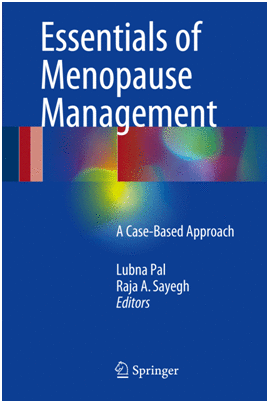
128,43 €Removing the shroud of complexity that had engulfed the field of menopause research and management for more than a decade, this unique, case-based resource discusses a range of topics relevant to the reproductive health of the aging female. The opening section includes chapters covering the symptomatology, epidemiology and impact of the menopausal burden, and reviews in depth the most current evidence on the efficacy, risks and benefits of pharmacological and alternative therapies. Utilizing vibrant case material, the second section details common symptoms of menopause and an individualized approach to management, such as sleep loss, skeletal fragility, sexual dysfunction, hirsutism and alopecia, primary ovarian insufficiency and failure, and vasomotor symptoms. Chapters reviewing therapeutic options and considerations tailored to gynecologic and breast cancer patients and survivors comprise the third and final section.
Developed as a multidisciplinary collaboration and addressing the needs of practicing reproductive medicine clinicians and researchers providing care to an aging female population, Essentials of Menopause Management provides clear, up-to-date information and recommendations on the range of current treatment strategies for menopause and its symptoms.
Features
• Presents a comprehensive, up-to-date discussion of the clinical management of menopause, including epidemiology, symptomatology, and hormonal and non-hormonal pharmacotherapy
• Includes case vignettes illustrating inferential and individualized approaches to menopause symptom management, as well as cases with unique considerations
• A practical, clinical guide for reproductive medicine specialists, gynecologists, reproductive endocrinologists, and primary care physicians
Authors
• Lubna Pal, MBBS, MRCOG, MS, Associate Professor of Obstetrics, Gynecology and Reproductive Sciences, Director, Polycystic Ovary Syndrome Program, Director, Menopause Program, Yale Fertility Center, Yale University School of Medicine, New Haven, CT, USA
• Raja A. Sayegh, MD, Associate Professor of Obstetrics and Gynecology, Boston University School of Medicine, Boston, MA, USA
 -5%
-5%
 -5%
-5%
 -5%
-5%
 -5%
-5%
 -5%
-5%
 -5%
-5%
 -5%
-5%
 -5%
-5%
 -5%
-5%
 -5%
-5%