Descuento:
-5%Antes:
Despues:
260,30 €Chapter 1 Key Themes in Environmental Science
Chapter 2 Science as a Way of Knowing: Critical Thinking about the Environment
Chapter 3 Dollars and Environmental Sense: Economics of Environmental Issues
Chapter 4 The Big Picture: Systems of Change
Chapter 5 The Human Population and the Environment
Chapter 6 Ecosystems: Concepts and Fundamentals
Chapter 7 The Biogeochemical Cycles
Chapter 8 Environmental Health, Pollution, and Toxicology
Chapter 9 Biological Diversity and Biological Invasions
Chapter 10 Ecological Restoration
Chapter 11 Agriculture, Aquaculture, and the Environment
Chapter 12 Landscapes: Forest, Parks, and Wilderness
Chapter 13 Wildlife, Fisheries, and Endangered Species
Chapter 14 Energy: Some Basics
Chapter 15 Fossil fuels and the Environment
Chapter 16 Alternative Energy and the Environment
Chapter 17 Nuclear Energy and the Environment
Chapter 18 Water Supply, Use, and Management
Chapter 19 Water Pollution and Treatment
Chapter 20 The Atmosphere and Climate Change
Chapter 21 Air Pollution
Chapter 22 Urban Environments
Chapter 23 Materials Management
Chapter 24 Our Environmental Future
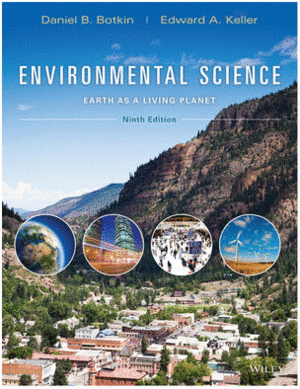
Environmental Science: Earth as a Living Planet, Ninth Edition provides emphasis on the scientific process throughout the book and gives readers the structure to develop their critical thinking skills. Updated and revised to include the latest research in the field, the 9th edition continues to present a balanced analytical and interdisciplinary approach to the field.
New To This Edition
• A complete revision of the basic energy and fossil fuel chapters to reflect the tremendous changes that have occurred as a result of exploiting the oil and natural gas resources within in the U.S
• A major revision of Global Change that presents a balanced coverage of this important Environmental Science topic.
• Basic chemistry for Environmental Science is now included in chapter 7 with biogeochemical cycles.
• An in depth discussion in Chapter 1 about the processes of learning and discovery in Environmental Science, with steps to creative thinking and higher cognitive abilities.
• New and updated Case Studies, Closer Look Boxes, and Critical Thinking Issues
• Updated features help students engage with key issues and topics in environmental science, and provide resources for instructors to foster dynamic in-class discussion.
The Wiley Advantage
• Scientific method is presented early to give students the foundation they need to understand topics presented throughout the book.
• Chapter-opening Case Studies give students interesting, relevant examples of issues and topics.
• Streamlined text clears away the “jargon” to bring the issues and the science to the forefront.
• Objectivity of presentation. In a discipline full of controversy and policy, it is critical that a text present content in a non-biased, objective manner. In addition to the clearly objective content presentation, this text also offers additional tools to help students think for themselves.
• Critical Thinking Issues within each chapter present students with alternate views of an important environmental issue and ask them to decide for themselves.
• Six central themes are integrated throughout the text help unify the concepts: Human Population Growth, Sustainability, A Global Perspective, An Urban World, People and Nature, Science and Values. These themes are highlighted in the Closer Look boxes and are brought together with Reexamining Themes sections at the end of each chapter to help the student to further understand how the material they have just studied is connected to each one of the book’s six themes.
 -5%
-5%
 -5%
-5%
 -5%
-5%
 -5%
-5%
 -5%
-5%
 -5%
-5%
 -5%
-5%
 -5%
-5%
 -5%
-5%
 -5%
-5%