Descuento:
-5%Antes:
Despues:
167,95 €1. Endometriosis: A Mysterious Disease
2. Pathological Aspect and Pathogenesis of Endometriosis
3. Visible and Invisible (Occult) Endometriosis
4. Role of Stem Cells in the Pathogenesis of Endometriosis
5. Role of NK Cells in Endometriosis
6. Macrophages in Pathophysiology of Endometriosis
7. Inflammation and Cytokines in Endometriosis
8. Epigenetics in Endometriosis
9. Roles of Prostaglandin E
10. Sex Steroids and Endometriosis
11. Aromatase Expression in Endometriosis and Its Significance
12. Apoptosis in Endometriosis
13. Role of Nerve Fibres in Endometriosis
14. Endometriosis in Experimental Models
15. Malignant Transformation of Endometriosis: Underlying Mechanisms
16. Potential New Drugs for Endometriosis: Experimental Evidence
17. Altered Biological Characteristics of Eutopic and Ectopic Endometrium
18. Prevention of Endometriosis
19. MR Imaging of Endometriosis
20. Biomarkers of Endometriosis
21. Classification of Endometriosis
22. The Association of Endometriosis with Ovarian Cancer: A Critical Review of Epidemiological Data
23. Surgical Management of Endometriosis
24. Systematic Laparoscopic Surgery for Complete Obliteration of the Cul-de-sac
25. Prevention of Recurrence After Surgery
26. Ovarian Reserve in Patients with Endometriosis
27. Infertility Treatment of Endometriosis Patients
28. Pregnancy Complications Associated with Endometriosis
29. Malignant Transformation of Endometriosis
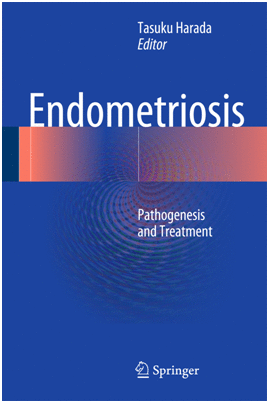
Endometriosis is one of the most common gynecological diseases, causing pelvic pain, infertility, and cancer. The condition reduces the quality of life for the estimated 10% of menstruating women who are affected by it. This book provides a clear insight into the pathogenesis and pathophysiology of endometriosis—essential information for clinicians intending to successfully treat the condition. The first part covers a range of topics including stem cells, NK cells, macrophages, inflammation, cytokines, epigenetics, prostaglandin, sex steroids, aromatase, apoptosis, nerve fibers, and malignant transformation to aid in understanding the pathogenesis and pathophysiology of the disease. The second part provides useful tools for therapy, specifically, notable recent techniques in prevention, imaging, biomarkers, medical treatments, surgical treatments, prevention of recurrence, and infertility treatments. Each chapter was written by an expert in the field, with nearly 40 researchers and clinicians contributing to the work. This book will be highly useful to clinicians as well as to research scientists who are interested in this enigmatic disease.
Features
• Helps clarify pathogenesis and pathophysiology of endometriosis
• Covers all essential information for clinicians, including prevention and practical treatment
• Written by nearly 40 internationally renowned researchers
Author
Dr. Tasuku Harada started his carrier as an assistant professor at Torrori University, Japan, and promoted to full Professor in 2008 there. He is one of the top scientists in Japan and well-known with his studies on endometriosis and ovarian cancer. He is one of the organization committee members of Second Asian Conference on Endometriosis (ACE II) in Istanbul, Turkey, from where he has invited many of the authors of this book.
 -5%
-5%
 -5%
-5%
 -5%
-5%
 -5%
-5%
 -5%
-5%
 -5%
-5%
 -5%
-5%
 -5%
-5%
 -5%
-5%
 -5%
-5%