Descuento:
-5%Antes:
Despues:
118,56 €1. Decreased Growth Velocity and/or Short Stature
2. Increased Growth Velocity and/or Tall Stature
3. Skeletal Disease
4. Multiple Fractures
5. Hypocalcemia
6. Hypercalcemia
7. Hypophosphatemia
8. Hypoglycemia
9. Hyperglycemia
10. Early Signs of Pubertal Development
11. Delayed or Stalled Pubertal Development
12. Atypical/Ambiguous/Non-binary Genitalia
13. Common Breast Complaints [Gynecomastia, Breast Asymmetry, Galactorrhea]
14. Acne, Hirsutism, and Other Signs of Increased Androgens
15. Irregular Menses
16. Hypertension
17. Initial Evaluation of Polydipsia and Polyuria
18. Acanthosis Nigricans
19. Weight Gain and/or Obesity
20. Weight Loss
21. Fatigue or Weakness
22. Dizziness or “Spells”: An Endocrine Approach
23. Excessive Sweating and Heat Intolerance
24. Growth Factors
25. Thyroid Studies
26. Calcium, Phosphate, Vitamin D, Parathyroid Hormone, and Alkaline Phosphatase
27. Gonadotropins, Gonadal Steroids, SHBG, and Related Labs
28. Sodium, Osmolality, and Antidiuretic Hormone
29. Adrenal Steroids, Adrenocorticotropic Hormone, and Plasma Renin Activity
30. Labs Related to Glucose Metabolism and Diabetes
31. Laboratory Evaluation of Hypoglycemia
32. Lipid Profiles
33. Prolactin
34. Catecholamines and Catecholamine Metabolites
35. Clinical Genetic Testing Options
36. Bone Age
37. Pituitary MRI
38. Thyroid Imaging
39. Bone Densitometry in Children: What Clinicians Need to Know
40. Short Stature
41. Hypothyroidism
42. Overview and Initial Management: Hyperthyroidism
43. Precocious Puberty
44. Delayed Puberty
45. Polycystic Ovary Syndrome
46. Disorders of Sex Development
47. Turner Syndrome
48. Klinefelter Syndrome
49. Adrenal Insufficiency
50. Overview and Initial Management of Cushing Syndrome
51. Persistent or Recurrent Hypoglycemia in Infants and Todlers
52. Type 1 Diabetes Mellitus
53. Overview and Initial Management of Type 2 Diabetes in Youth
54. Vitamin D Deficiency
55. Central Diabetes Insipidus (Etiology, Epidemiology, and Management)
56. Pituitary or Suprasellar Lesions
57. Dyslipidemia in the Pediatric Population
58. Overview and Management of Childhood Obesity
59. Transgender Care
60. Correction to: Sodium, Osmolality, and Antidiuretic Hormone
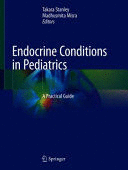
This book is aimed at primary care providers who care for the pediatric age group (general pediatrician, the PCP working with pediatric patients, and family medicine providers) with the goal of covering the endocrine differential diagnosis of common signs and symptoms of possible endocrine disease as well as appropriate initial laboratory evaluation and interpretation.
While multiple pediatric endocrine textbooks exist, most of them are heavy in coverage of physiology and rare diseases, with less discussion of practical steps in evaluation and diagnosis. This book distinguishes itself through a very practical approach. The first section is organized by presenting signs and symptoms, the second section is organized by laboratory interpretation, and the third section provides summaries of common pediatric endocrine disorders. Chapters are concise, providing critical clinical information including clinical pearls, common diagnoses and important points in patient counseling.
Written by experts in the field, Endocrine Conditions in Pediatrics is a valuable resource that provides general pediatricians and other primary care providers with all of the information they need to provide superb patient care before transferring to a pediatric endocrinologist when necessary.
Features
• Is one of very few clinical resources covering endocrinology but targeting primary care physicians, general pediatricians, and family medicine practitioners
• Provides an easily accessible reference that starts from signs/symptoms rather than from diseases
• The text and accompanying pearls specifically address what pediatric endocrinologists want primary care physicians and general pediatricians to know about endocrine disease and its appropriate management and referral
 -5%
-5%
 -5%
-5%
 -5%
-5%
 -5%
-5%
 -5%
-5%
 -5%
-5%
 -5%
-5%
 -5%
-5%
 -5%
-5%
 -5%
-5%