Descuento:
-5%Antes:
Despues:
91,20 €1: The genesis of breathlessness - what do we understand?, Douglas Beach & Richard M. Schwartzstein
2: Multidimensional assessment of dyspnoea, Virginia Carrieri-Kohlman & Deborah Dudgeon
3: Breathlessness in heart failure, David P. Dutka & Miriam J. Johnson
4: Dyspnoea in chronic obstructive pulmonary disorder, Michelle M. Peters & Denis O'Donnell
5: Breathlessness in advanced cancer, Deborah Dudgeon
6: Breathlessness in neurological disease, Fliss Murtagh, Rachel Burman & Polly Edmonds
7: Breathlessness in children, Stephen Liben
8: Respiratory muscle function in breathlessness, Michael Polkey
9: Pulmonary rehabilitation, Nha Voduc, Katherine Webb & Denis O'Donnell
10: Surgical interventions to improve dyspnoea, Andrew J. Drain and Francis C. Wells
11: Non-pharmacological approaches, Virginia Carrieri-Kohlman
12: Oxygen in the palliation of breathlessness, Anna Spathis, Rosemary Wade & Sara Booth
13: Pharmacological approaches to breathlessness, David C. Currow
14: A palliative approach to the breathless patient, Sara Booth & Deborah Dudgeon
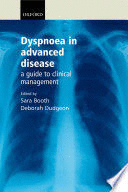
Dyspnoea (breathlessness) is an uncomfortable awareness of breathing that occurs in approximately 30-75% of terminal cancer patients. It is one of the most distressing symptoms for both patients and family members and can seriously impact on quality of life. Typically, dyspnoea is associated with congestive heart failure, end-stage chronic obstructive pulmonary disease, or lung cancer. This book provides palliative care doctors and specialist nurses with practical guidelines to help manage and treat patients with breathlessness. It includes the science behind the symptom in an attempt to explain the pathology and physiology of this complex condition.
The book has been organized to address generalized aspects of breathlessness in advanced illness and more specific aetiologies and managements relevant to particular underlying diseases. It summarizes the epidemiology and the pathophysiology of breathlessness, measurement, research approaches, rehabilitation and exercise, clinical approaches that can be taken at the bedside, pharmacological and non-pharmacological approaches, and surgical interventions.
The care of patients with dyspnoea requires input from a variety of disciplines such as palliative care, physiotherapy, respiratory medicine and nursing, and this is reflected in the multidisciplinary list of contributors.
Features
• Summarizes current knowledge on the pathophysiology and treatment of dyspnoea in people with different underlying diseases
• Provides comprehensive information on the latest scientific advances of this complex condition
• Combines scientific understanding with practical clinical guidance
Author
• Sara Booth, Macmillan Consultant in Palliative Medicine and Lead Clinician in Palliative Care, Cambridge University Hospitals NHS Foundation Trust; Honorary Senior Lecturer, Department of Palliative Care and Policy, Kings College, London, UK.
• Deborah Dudgeon, W. Ford Connell Professor of Palliative Care Medicine, Queen's University, Kingston, Ontario, Canada
 -5%
-5%
 -5%
-5%
 -5%
-5%
 -5%
-5%
 -5%
-5%
 -5%
-5%
 -5%
-5%
 -5%
-5%
 -5%
-5%
 -5%
-5%