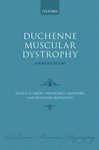
EMERY, A.; MUNTONI, F.; QUINLIVAN, R.
Descuento:
-5%Antes:
Despues:
87,78 €-A new edition of the classic monograph on the topic from a distinguished and expert author team with over 40 years exprience in the field.
New to this Edition:
-Revised and updated to cover new research and developments and consequences for diagnosis, screening, management, and therapy of DMD.
Descrption
Duchenne Muscular Dystrophy, an inherited and progressive muscle wasting disease, is one of the most common single gene disorders found in the developed world. In this fourth edition of the classic monograph on the topic, Alan Emery and Francesco Muntoni are joined by Rosaline Quinlivan, Consultant in Neuromuscular Disorders, to provide a thorough update on all aspects of the disorder.
Recent understanding of the nature of the genetic defect responsible for Duchenne Muscular Dystrophy and isolation of the protein dystrophin has led to the development of new theories for the disease's pathogenesis. This new edition incorporates these advances from the field of molecular biology, and describes the resultant opportunities for screening, prenatal diagnosis, genetic counselling and from recent pioneering work with anti-sense oligonucleotides, the possibility of effective RNA therapy. Although there is still no cure for the disorder, there have been significant developments concerning the gene basis, publication of standards of care guidelines, and improvements in management leading to significantly longer survival, particularly with cardio-pulmonary care. The authors also investigate other forms of pharmacological, cellular and gene therapies.
Duchenne Muscular Dystrophy will be essential reading not only for scientists and clinicians, but will also appeal to therapists and other professionals involved in the care of patients with muscular dystrophy.
Authors
- Alan E. H. Emery, Emeritus Professor of Human Genetics, University of Edinburgh, Honorary Fellow, Green Templeton College, Oxford and Honorary Visiting Fellow, Peninsula College of Medicine, Plymouth, UK,.
Alan EH Emery is a qualified physician, scientist and educator with wide experience of patient care and human genetics laboratory research. He has published over 400 scientific papers and written or edited 30 books regarding clinical, biochemical and genetic studies in neuromuscular disorders. For his work over the last 40 years he has received many national and international awards, including the Lifetime Achievement Award of the World Federation of Neurology. He is currently a Vice-President of the Muscular Dystrophy Campaign of Great Britain.
- Francesco Muntoni, Professor and Honorary Consultant in Paediatric Neurology, UCL Institute of Child Health and Great Ormond Street Hospital Foundation Trust, London, UK,
Francesco Muntoni specialised in Child Neurology and Psychiatry in Italy before moving to England in 1993. From 1993 he worked at Hammersmith Hospital's Neuromuscular Centre under the direction of Professor Victor Dubowitz and after 1996 as the Centre's Research and Clinical Director.
-Rosaline C. M. Quinlivan, Consultant in Neuromuscular Disorders, Centre for Neuromuscular Diseases, National Hospital for Neurology and Neurosurgery, and Dubowitz Neuromuscular Centre, Great Ormond Street Foundation Trust, London UK.
Ros Quinlivan trained at University College London, initially in Psychology and, subsequently, medicine. She has been a Consultant in Neuromuscular Disease for 18 years and has wide clinical experience of both paediatric and adult onset genetic muscular disorders. She is currently the Clinical Lead for Transition for Young Adults with Neuromuscular Disease at Great Ormond Street Hospital and The National Hospital for Neurology and Neurosurgery.
Table of Contents
1: Introduction
2: History of the disease
3: Clinical features
4: Confirmation of the diagnosis
5: Differential diagnosis
6: Involvement of tissues other than skeletal muscle
7: Biochemistry of Duchenne muscular dystrophy
8: Genetics
9: Molecular pathology
10: Pathogenesis
11: Prevention
12: Genetic counselling
13: Management
Appendices
 -5%
-5%
 -5%
-5%
 -5%
-5%
 -5%
-5%
 -5%
-5%
 -5%
-5%
 -5%
-5%
 -5%
-5%
 -5%
-5%
 -5%
-5%