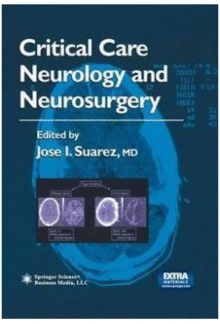
SUAREZ, J.; BERSHAD, E.; RAO, C.
Descuento:
-5%Antes:
Despues:
129,43 €1. Introduction: General Principles of Neurocritical Care
2. Organization of a Neurosciences Critical Care Unit
3. Cerebral Blood Flow Physiology and Monitoring
4. Cerebral Metabolism: Implications for Neurocritically Ill Patients
5. Cerebral Edema and Intracranial Dynamics: Monitoring and Management of Intracranial Pressure and Cerebral Perfusion Pressure
6. Neurologic and Systemic Monitoring in the Neurosciences Critical Care Unit
7. Neuro-Ophthalmologic Evaluation of the Neurocritical Care Patient
8. Neuroimaging in Neuroemergencies
9. Cardiovascular Monitoring in the Neurosciences Critical Care Unit
10. Ventilatory Management in the Neurosciences Critical Care Unit
11. Autonomic Disorders Requiring Intensive Care
12. Sedation and Analgesia in the Critically Ill Neurologic and Neurosurgical Patient
13. Blood Pressure Management in the Neurocritical Care Patient
14. Nutrition and Diet Therapy in the Neurosciences Critical Care Unit
15. Nursing Care in the Neurosciences Critical Care Unit
16. Bioethical Issues in the Neurosciences Critical Care Unit
17. Outcomes of Neurosciences Critical Care
18. Clinical Trial Design in Neurocritical Care
19. Electronic Health Records and Research Database in Neurocritical Care: Medical Complications in the Neurosciences Critical Care Unit
20. Acute Respiratory Distress Syndrome and Acute Lung Injury
21. Electrolyte and Acid Base Disorders
22. Venous Thrombosis and Pulmonary Embolism
23. Acute Coronary Syndrome
24. Acute Renal Failure
25. Acute Abdomen and Gastrointestinal Bleeding
26. Coagulopathies
27. Sepsis
28. Neuroendocrine Failure
29. Coma and Brain Death
30. Endovascular Therapy and Neurosciences Critical Caret
31. Neurointensive Care of the Acute Ischemic Stroke Patient
32. Management of Nontraumatic Intracerebral Hemorrhage
33. Subarachnoid Hemorrhage
34. Cerebral Venous Sinus Thrombosis
35. Traumatic Head Injury
36. Spinal Cord Injury and Related Disorders
37. Postoperative Management in the Neurosciences Critical Care Unit
38. Status Epilepticus
39. Myasthenic Crisis
40. Critical Care of Guillain-Barre Syndrome
41. Less Common Causes of Quadraparesis and Respiratory Failure
42. Infections of the Central Nervous System
43. Management of the Patient With Mitochondrial Disease in the Neurosciences Critical Care Unit
44. Neurocritical Care During Pregnancy and Puerperium
45. Appendices
Appendix A: Nursing Flow Sheet in the Neurosciences Critical Care Unit
Appendix B: Useful Hemodynamic Parameters
Appendix C: Respiratory Parameters
Appendix D: Interpretation of Biochemical Results of Plasma an Urine with Renal Insufficiency
Appendix E: Renal Equations
Appendix F Calcium and Magnesium Preparations
Appendix G: Acid-Base Rules of Thumb
Appendix H: Differential Diagnosis of Metabolic Acidosis
Appendix I: Composition of Common Intravenous Solutions in the Neurosciences Critical Care Unit
Appendix J: Serum Concentrations of Frequently Used Drugs in the Neurosciences Critical Care Unit
Appendix K: Dosages in Renal Failure in the Neurosciences Critical Care Unit
Appendix L: Various Tube Feedings
Appendix M: Energy Requirements in Adult Patients
Appendix N: Useful Neurologic Physiologic Parameters and Scales Commonly Used in the Neurosciences Critical Care Unit
Appendix O: Summary of Most Commonly Cited Clinical Trials Pertaining the Practice of Neurocritical Care.
After the success of the first edition of Critical Care Neurology and Neurosurgery, I
find myself at the helm of this second delivery of the salient advances in the field
of neurocritical care. Since the first edition went into print, two major advances in
the field have occurred. The first is the creation of the Neurocritical Care Society
(www.neurocriticalcare.org) with a peer-reviewed journal published by Humana Press
– Neurocritical Care. The second advance is the availability of a certifying examination
and credentialing of training programs in neurocritical care via the United Council of
Neurological Subspecialties –UCNS (www.ucns.org). These will certainly solidify the
practice of caring for the critically ill neurologic and neurosurgical patient as a separate
subspecialty. It is with this excitement that this second edition of this title is launched.
The organization and length of this book has been changed to reflect discoveries in the
field and to keep pace with significant advances. The book has been divided into three
distinct sections following an introductory chapter on the basic definitions and triage
of the critically ill neurologic and neurosurgical patient, similar to what was presented
in the first edition. The primary market is practicing neurologists, neurosurgeons, and
neuroanesthesiologists, in particular those with subspecialty interest in neurocritical
care. Other clinicians with an interest in neurocritical care are pulmonologists, internists,
general surgeons, and anesthesiologists with a subspecialty in critical care. Also
neuroradiologists may find this book interesting and of help for their daily clinical
practice. This book could also be translated and marketed in spanish and portuguese –
speaking countries. There is no single textbook dedicated to neurocritical care in these
two languages. I personally would undertake the translation and editing of those editions.
The first section deals with the basic principles of neurocritical care and begins with
recommendations for the organization of an up-to-date Neurosciences Critical Care Unit.
This section will set the foundations for a good understanding of the complex interactions
between the brain and different body systems. A discussion on common bioethical issues
as well as clinical trial design and research databases is also presented. The second section
encompasses common medical complications of the neurocritically ill patient. This section
includes the addition of ten completely new chapters discussing the latest advances
on secondary systemic complications. The third section presents chapters on frequent
primary neurologic and neurosurgical diagnoses and updated therapeutic strategies.
In regard to tables and figures/illustrations, I estimate each chapter will have 6 figures
and 4-6 tables. I will encourage authors to use illustrations and will try to work with an
illustrationist to maintain uniformity of all the graphs. Figures and graphs will be black
and white except for appendices N10-12 like in the first edition. Finally, like the first
edition, the book concludes with an appendix of different useful equations, tips, and
scales that will become handy when working in the Neurosciences Critical Care Unit. One
addition is an appendix summarizing the most frequently cited clinical trials in general
and neurocritical care.
 -5%
-5%
 -5%
-5%
 -5%
-5%
 -5%
-5%
 -5%
-5%
 -5%
-5%
 -5%
-5%
 -5%
-5%
 -5%
-5%
 -5%
-5%