Descuento:
-5%Antes:
Despues:
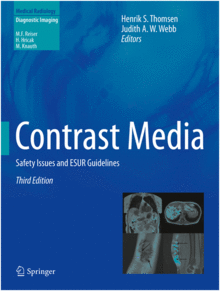
177,83 €- Fully updates the previous edition and includes new chapters on various complex topics
- Represents a unique and unparalleled source of information on the many safety issues relating to different contrast media
- Includes chapters on acute and delayed non-renal adverse reactions and on renal adverse reactions
- Presented in a handy, easy-to-use format
In 1994 the European Society of Urogenital Radiology (ESUR) set up a committee to consider the safety of contrast media used for diagnostic imaging. Subsequently the committee questioned ESUR members, reviewed the literature, proposed guidelines, and discussed these proposals with participants at the annual symposia of the society. The end result of this work was the successful first edition of this book, published in 2006, which was followed by an equally successful second edition in 2009. This third edition not only fully updates the previous edition, but also includes new chapters on complex topics such as use of contrast media in children and practical aspects of off-label contrast media use. The authorship includes members, past members, and non-members of the Contrast Media Safety Committee. Comprehensive consideration is given to the many different safety issues relating to iodine-based contrast media, gadolinium-based contrast media, microbubbles for ultrasound, and barium sulfate. The text includes chapters on both acute and delayed non-renal adverse reactions and on renal adverse reactions. All of the questions frequently raised in radiological practice are addressed. This book, presented in a handy, easy-to-use format, provides an invaluable, unique, and unparalleled source of information.
Table of contents (31 chapters)
1.Contrast Media Classification and Terminology
2.Requests for Imaging Using Contrast Media: What Information Must be Provided
3.Off-Label Use of Medicines: Legal Aspects
4.Off-Label Use of Contrast Media: Practical Aspects
5.Pharmacovigilance: When to Report Adverse Reactions to Contrast Media
6.What is Required in Order to Get the Authorities to Approve a New Contrast Medium?
7.A Critical Review of Meta-Analysis of Adverse Events After Contrast Media
8.Acute Adverse Reactions to Contrast Media: Mechanisms and Prevention
9.Iodine-Based Contrast Medium Temperature and Adverse Reactions
10.Management of Acute Adverse Reactions to Contrast Media
11.Chronic Kidney Disease, Serum Creatinine and Estimated Glomerular Filtration Rate (eGFR)
12.Contrast Medium-Induced Nephropathy
13.Dialysis and Contrast Media
14.Pregnancy and Lactation: Intravascular Use of Contrast Media
15.Pheochromocytoma and Contrast Media
16.Contrast Media and Interactions with Other Drugs and Clinical Tests
17.Contrast Media Extravasation Injury
18.Late Adverse Reactions to Iodine-Based Contrast Media
19.Effects of Iodine-Based Contrast Media on Blood and Endothelium
20.Effects of Iodine-Based Contrast Media on Thyroid Function
21.Pulmonary Effects of Iodine-Based Contrast Media
22.Gadolinium Chelates and Stability
23.Diagnostic Efficacy of Gadolinium-Based Contrast Media
24.Radiography with Gadolinium-Based Contrast Media
25.Acute Adverse Reactions to Gadolinium-Based Contrast Media
26.Nephrogenic Systemic Fibrosis and Gadolinium-Based Contrast Media
27.Organ-Specific Gadolinium-Based Contrast Media
28.Ultrasonographic Contrast Media
29.Barium Preparations: Safety Issues
30.Contrast Media Use in Pediatrics: Safety Issues
31.Appendix A: ESUR Guidelines on Contrast Media Version 8.1
 -5%
-5%
 -5%
-5%
 -5%
-5%
 -5%
-5%
 -5%
-5%
 -5%
-5%
 -5%
-5%
 -5%
-5%
 -5%
-5%
 -5%
-5%