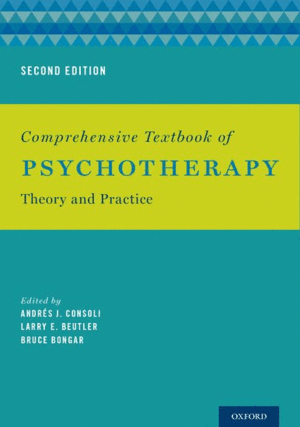
CONSOLI, A.; BEUTLER, E.; BONGAR, B.
Descuento:
-5%Antes:
Despues:
90,25 €1.The Comprehensive Textbook of Psychotherapy: History, Theory, Research, Practice, and Diversity in Psychotherapy
• PART I: Models of Psychotherapy
2. Unity and Diversity Among Psychotherapies: A Comparative Perspective
3. Psychodynamic Therapies in Historical Perspective
4. Psychodynamic Therapies in Practice: Time-Limited Dynamic Psychotherapy
5. Cognitive-Behavioral Therapies in Historical Perspective
6. Cognitive-Behavioral Therapies in Practice
7. Existential, Humanistic, Experiential Psychotherapies in Historical Perspective
8. Humanistic-Experiential Psychotherapy in Practice: Emotion-Focused Therapy
9. Interpersonal Psychotherapies in Historical Perspective
10. Interpersonal Psychotherapies in Practice: Working with Depressed Adults
11. Systemic Therapies in Historical Perspective
12. Systemic Therapies in Practice: Family Consultation for Change-Resistant Health and Behavior Problems: A Systemic-Strategic Approach
13. Integrative Therapies in Historical Perspective
14. Integrative and Eclectic Therapies in Practice: Systematic Treatment Selection
• PART II: Psychotherapy by Modalities and Populations
15. Group Therapy: Theory and Practice
16. Family Therapy: Theory and Practice
17. Electronic Based Therapy: Theory and Practice
18. Psychotherapy with Children and Adolescents: Theory and Practice
19. Psychotherapy with Older Adults: Theory and Practice
20. Psychotherapy with Women: Theory and Practice
21. Psychotherapy with Men: Theory and Practice
22. Psychotherapy with Lesbian, Gay, and Bisexual Clients: Theory and Practice
23. Psychotherapy with Racial/Ethnic Minority Groups: Theory and Practice
24. Psychotherapy with Immigrants and Refugees: Theory and Practice
25. Psychotherapy and the Schizophrenia Spectrum: Theory and Practice
26. Psychotherapy with Military Personnel and Veterans: Theory and Practice
27. Psychotherapy with People Exposed to Mass Casualty Events: Theory and Practice
28. Psychotherapy in Clinical Emergencies: Theory and Practice
• PART III: Research Methods and Randomized Clinical Trials, Professional Issues, and New Directions in Psychotherapy
29. Methods of Psychotherapy Research and Randomized Clinical Trials
30. The Training and Development of Psychotherapists: A Life-Span Perspective
31. Ethics and Legal Matters in Psychotherapy
32. The Modern Psychotherapist and the Future of Psychotherapy
Index
This completely updated second edition of Comprehensive Textbook of Psychotherapydiscusses the contemporary landscape of psychotherapy, honors its complexities, and focuses on history, theory, science, practice, and diversity. The book is divided into three parts: (1) Models of Psychotherapy; (2) Psychotherapy by Modalities and Populations, and (3) Research Methods and Randomized Clinical Trials, Professional Issues, and New Directions in Psychotherapy. Part 1 has been expanded to include two chapters on Interpersonal Psychotherapy (IPT). This section now details the similarities and differences that exist across models, in an effort to articulate overarching principles of human change and stability processes that are advanced through professional practice. Chapters in Part 1 are organized into sets of two; each set has a theory chapter covering one of the six psychotherapy models discussed, followed by a practice chapter that conveys and illustrates the use of the model in a specific application, including a detailed case example. Part 2 addresses modalities of psychotherapy such as group, family, and electronic-based approaches, as well as psychotherapy with specific populations such as children and adolescents, older adults, and women. This section, too, has been expanded to include treatment of people in the schizophrenia spectrum, a chapter on treatment of immigrants and refugees, and another on working with men. There are also new chapters on working with military personnel and veterans, and a chapter on treating survivors of trauma, specifically on those exposed to mass trauma. Still another new chapter is included on working with psychological emergencies. Part 3 covers research methods and randomized clinical trials, the training of psychotherapists, ethics and legal matters, and the future of psychotherapy. Research and diversity are emphasized in each chapter and throughout the book. This new edition of a classic textbook will be valuable to instructors and students, psychotherapists-in-training, practitioners, and supervisors alike.
Features
• Continues the tradition of the first edition by emphasizing both best clinical practices and the best of evidence-based approaches to psychotherapy
• Each chapter opens with an abstract and keywords and ends with a list of conclusions and key points, review questions, and a list of resources making the textbook a valuable instruction tool
• Combines historical and research reviews with practical, how-to narratives
• Includes contributions from over 75 leading experts in psychotherapy from multiple countries
Authors
• Andrés J. Consoli, PhD, is Associate Professor in the Department of Counseling, Clinical, and School Psychology at the University of California, Santa Barbara. Dr. Consoli has served as president of the National Latina/o Psychological Association (2014), as member-at-large of APA's Division 52: International Psychology (2011-2013), as president of the Interamerican Society of Psychology (2007-2009), and as president of the Western Association of Counselor Education and Supervision (2001). He has served in the Council of National Psychology Associations for the Advancement of Ethnic Minority Interests (CNPAAEMI) (2014-2016) and chairs the Council in 2016.
• Larry E. Beutler, PhD, ABPP, is Wm McInnes Distinguished Professor Emeritus of Clinical Psychology, Palo Alto University, and Professor Emeritus, University of California, Santa Barbara. Dr. Beutler received his Ph.D. from the University of Nebraska and subsequently served on the faculties of Duke University Medical Center, Stephen F. Austin State University, Baylor College of Medicine, the University of Arizona Health Sciences Center, and the University of California at Santa Barbara. He is the Past Director of the National Center for the Psychology of Terrorism and the continuing Director of the Institute for the Study of Equine Assisted Change at Palo Alto University (PAU).
• Bruce Bongar, PhD, ABPP, FAPM, CPsychol, is Calvin Distinguished Professor of Psychology, Palo Alto University, and Visiting Professor of Psychiatry and Behavioral Sciences at Stanford University. Dr Bongar is past co-director of training and co-chair, PGSP-Stanford Doctor of Psychology Program, and Consulting Professor of Psychiatry and Behavioral Sciences Stanford University School of Medicine. For over 30 years, Dr. Bongar maintained a small practice specializing in psychotherapy, consultation and supervision in working with the difficult and life-threatening patient. Past clinical appointments include service as a senior clinical psychologist with the Division of Psychiatry, Children's Hospital of Los Angeles, and work as a clinical/community mental health psychologist on the psychiatric emergency team of the Los Angeles County Department of Mental Health.
 -5%
-5%
 -5%
-5%
 -5%
-5%
 -5%
-5%
 -5%
-5%
 -5%
-5%
 -5%
-5%
 -5%
-5%
 -5%
-5%
 -5%
-5%