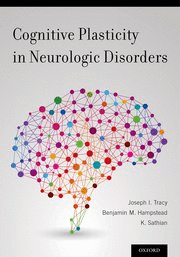
TRACY, J.; HAMPSTEAD, B.; SATHIAN, K.
Descuento:
-5%Antes:
Despues:
92,58 €Cognitive Plasticity in Neurologic Disorders describes and specifies the cognitive impact of neuroplastic processes in key neurologic disorders and syndromes. It is set apart from previous works in this area by its emphasis on the changing quality of neurocognition, demonstrating that this dynamic nature emerges from the neuroplastic processes at work in both mild and severe states of brain disease or injury. This resource describes the ways neurological illness or trauma (or attempts to treat patients with such conditions) can trigger neuroplastic mechanisms in the brain, inducing cognitive reorganization and remapping of brain networks.
Each chapter shows how the cognitive and behavioral presentation of the disorder mirrors the changing neurobiologic context, and displays the numerous techniques being employed (e.g. behavior and rehabilitation therapies, electrical stimulation, and computer/machine neuromodulation of brain signals) underlying the neurobiology in ways that facilitate adaptive plasticity and cognitive recovery. An important feature of the book involves characterizing the degree to which the mechanistic principles governing neuroplastic responses and cognitive reorganization in the brain have been elucidated, making clear that it is these principles which will allow us to further develop rational rehabilitative therapies, match patients to appropriate treatments, and even begin to predict clinical treatment outcomes.
- Unlike many books on neural repair and plasticity, this volume does not discuss neurobiologic change and neural reorganization without making connections to cognitive or behavioral processes that may be both a cause and an effect of such neural reorganization.
- Unlike existing texts, the emphasis is consistently placed on the dynamic and potentially changing aspects of these abnormalities and the degree to which these abnormalities set off or inhibit neuroplastic responses, describing the cognitive processes and effects that emerge because of the changing neurobiologic context.
- The book provides an excellent up-to-date summary of the literature on neuroplasticity, cognitive reorganization, and recovery in each of the disorders and syndromes, specifying the neuroplastic responses and cognitive mechanisms unique to the disorder, distinguishing between those which foster or inhibit recovery and response to treatment.
Authors
- Joseph I Tracy, PhD, Jefferson Hospital for Neuroscience, Thomas Jefferson University, USA.
- Benjamin M Hampstead, PhD, Emory University Center for Rehabilitation Medicine, USA.
- Krishnankutty Sathian, MD, PhD, Department of Neurology, Emory University School of Medicine, USA.
Table of Contents
Section 1 Plasticity of Cognition in Neurologic Disorders
1. Conceptual Issues in Cognitive Neuroplasticity Recovery, compensation and reorganization in neuropathology - levels of conceptual and methodological challenges
2. Epilepsy Seizure-induced neuroplasticity and cognitive network reorganization in epilepsy
3. Stroke Neuroplastic mechanisms of language recovery after stroke
4. Parkinsons Disease Cognitive plasticity in Parkinson's Disease
5. Multiple Sclerosis Neuroplasticity in multiple sclerosis
6. Tumor: Plasticity of cognition in brain gliomas
7. Traumatic Brain Injury Connectivity modeling and neuroplasticity after traumatic brain injury
8. Autism Spectrum Aberrant brain plasticity in autism spectrum disorders
9. Mild Cognitive Impairment Cognitive plasticity in healthy older adults, mild cognitive impairment, and Alzheimer's disease: contributory factors and treatment responses
Section 2 Plasticity of Cognition in Neurologic Syndromes
10. Executive Dysfunction Plasticity in prefrontal cortical networks after brain injury: Finding theoptimal paths
11. Amnesia Organic amnesia: What factors determine how much it recovers over time?
12. Age-Related Cognitive Decline Aging-related changes in neural substrates of motor and cognitive systems
13. Neglect Spatially biased decisions: Towards a dynamic interactive model of visual neglect
14. Apraxia Neuroplasticity in apraxia recovery
Section 3. Plasticity of Cognition and the New Emerging Technologies
15. Brain Computer and Machine Interfaces Clinical brain-machine interfaces
16. Brain Stimulation Methods Assessment and enhancement of human brain plasticity using electromagnetic stimulation
 -5%
-5%
 -5%
-5%
 -5%
-5%
 -5%
-5%
 -5%
-5%
 -5%
-5%
 -5%
-5%
 -5%
-5%
 -5%
-5%
 -5%
-5%