Descuento:
-5%Antes:
Despues:
66,20 €SECTION 1 Clinical Calculations
Chapter 1 Pre-Test
CHAPTER 1
Arithmetic Review
CHAPTER 2
Systems of Measurement and Common Equivalents
CHAPTER 3
Solving Problems Using Dimensional Analysis
CHAPTER 4
One-Factor Medication Problems
CHAPTER 5
Two-Factor Medication Problems
CHAPTER 6
Three-Factor Medication Problems
SECTION 2 Practice Problems
One-Factor Practice Problems
Two-Factor Practice Problems
Three-Factor Practice Problems
Comprehensive Practice Problems
Answer Key
SECTION 3 Case Studies
Case Study 1 Congestive Heart Failure
Case Study 2 COPD/Emphysema
Case Study 3 Small Cell Lung Cancer
Case Study 4 Acquired Immunodeficiency Syndrome (AIDS)
Case Study 5 Sickle Cell Anemia
Case Study 6 Deep Vein Thrombosis
Case Study 7 Bone Marrow Transplant
Case Study 8 Pneumonia
Case Study 9 Pain
Case Study 10 Cirrhosis
Case Study 11 Hyperemesis Gravidarum
Case Study 12 Preeclampsia
Case Study 13 Premature Labor
Case Study 14 Cystic Fibrosis
Case Study 15 Respiratory Syncytial Virus (RSV)
Case Study 16 Leukemia
Case Study 17 Sepsis
Case Study 18 Bronchopulmonary Dysplasia
Case Study 19 Cerebral Palsy
Case Study 20 Hyperbilirubinemia
Case Study 21 Spontaneous Abortion
Case Study 22 Bipolar Disorder
Case Study 23 Anorexia Nervosa
Case Study 24 Clinical Depression
Case Study 25 Alzheimer’s Disease
Case Study 26 Otitis Media
Case Study 27 Seizures
Case Study 28 Fever of Unknown Origin
Case Study 29 TURP with CBI
Case Study 30 Hypercholesterolemia
Case Study 31 Hypertension
Case Study 32 Diabetic Ketoacidosis
Case Study 33 End-Stage Renal Failure
Case Study 34 Fluid Volume Deficit
Case Study 35 Increased Intracranial Pressure
Case Study 36 Breast Cancer
Case Study 37 Severe Abdominal Pain
Case Study 38 Acute Asthma Attack
Case Study 39 Right Total Hip Replacement
Case Study 40 Colon Resection
Case Study 41 Left Total Knee Replacement
Case Study 42 Chest Pain
Case Study 43 Pneumococcal Meningitis
Case Study 44 Diabetic Ketoacidosis
Case Study 45 C-Section Delivery
Case Study 46 Iron Deficiency Anemia
Case Study 47 Lyme Disease
Case Study 48 Infectious Mononucleosis
Case Study 49 H1N1 Influenza (Swine Flu)
Case Study 50 Bronchiolitis
SECTION 4 Comprehensive Post-Tests
Comprehensive Post-Test 1
Comprehensive Post-Test 2
Appendix Educational Theory of Dimensional Analysis
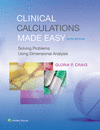
Clinical Calculations Made Easy is a compact, easy-to-use, pocket-sized guide/reference to dosage calculation and drug administration. It includes a review of basic math skills, measurement systems, and drug calculations/preparations using dimensional analysis. The sixth edition provides many opportunities for students to practice their skills. Additional practice problems further strengthen the student’s dosage calculations skills while new information related to vaccines has been added with tables for administering vaccines to adults and children. In addition, there are practice problems related to the tables to help students understand how to use these types of tables effectively.
Features
- Examples show the step-by-step procedure of how to solve the problem
- Thinking it Through provides insights into how to solve complex problems emphasizing the critical thinking process
- In-Chapter Exercises provide opportunities for students to practice the new skill
- Practice Problems test student’s ability to solve problems
- Answer Key, at end of chapters, allows students to self-correct problems to provide instant feedback
- Post-Tests appear at the end of chapters that can be torn out of book for instructors to evaluate student progress
- Two Comprehensive Post Tests appear at the end of book that can be torn out of book for a comprehensive evaluation
- Drug Labels with related problems provide real-life experiences
- Preventing Medication Errors provides information to help nurses avoid medication errors
- Pediatric Medication icon highlights problems related to pediatric care
About the Author(s)
Gloria P. Craig EdD, MSN, RN
Instructor, Iowa Methodist School of Nursing, Des Moines, IA
 -5%
-5%
 -5%
-5%
 -5%
-5%
 -5%
-5%
 -5%
-5%
 -5%
-5%
 -5%
-5%
 -5%
-5%
 -5%
-5%
 -5%
-5%