Descuento:
-5%Antes:
Despues:
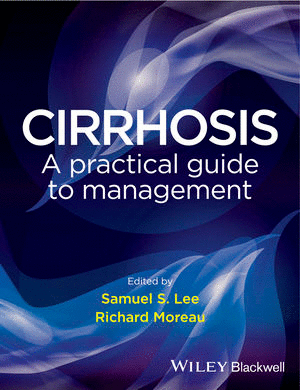
124,48 €Cirrhosis: a practical guide to management providesgastroenterologists and hepatologists with an up-to-date clinicalguide presenting the very best evidence-based practice in thediagnosis, treatment and management of liver cirrhosis and its manycomplications. Designed to offer practical guidance at alltimes, it provides doctors with an extremely useful tool in theclinical setting, with each chapter featuring diagnostic/managementalgorithms, key points and other pedagogic features. Divided into 2 parts, a diagnosis and pathophysiology section and amanagement of complications section, key topics include: - Diagnostic laboratory tests - Diagnostic imaging modalities - Acute-on chronic liver failure - Agents and drugs to avoid - End stage liver failure: liver transplant evaluation - Hepatocellular carcinoma Aimed at the specialist, as well as the practicing trainee at thetop-end of specialty training, the emphasis throughout is onproviding optimum clinical management guidance most relevant topracticing hepatologists and gastroenterologists, and is aninvaluable guide to this increasingly common condition.
Authors
- Samuel S. Lee, MD, Professor, Department of Medicine and Head, Division of Gastroenterology, University of Calgary, Canada. Sam Lee is one of the world’s leading lights on cirrhosis and is editor-in-chief of the Wiley journal Liver International, the official journal of the International Association for the Study of the Liver.
- Richard Moreau, MD, Head and Director of Research at the National Institute of Health (Inserm), Paris, France.
Table of Contents
Part 1: Diagnosis and Pathophysiology
1 Clinical clues to diagnosis of cirrhosis
2 Diagnostic laboratory tests
3 Diagnostic imaging modalities
4 Histology/pathology
5 Fibrosis and fibrogenesis
6 Non-invasive diagnostic tests including fibroscan
7 Evaluating prognosis
8 End-stage liver Failure: liver transplant evaluation
Part 2: Complications of cirrhosis
9 Acute-on chronic liver failure
10 Hepatocellular carcinoma
11 Hepatic encephalopathy
12 Malnutrition and nutritional support in cirrhosis
13 Varices, portal hypertensive gastropathy and GAVE
14 Ascites
15 Spontaneous bacterial peritonitis and other infections
16 Hepatorenal syndrome and acute kidney injury
17 The hepatopulmonary syndrome
18 Hyponatremia and other electrolyte/ion disorder
19 Portopulmonary hypertension
20 Cirrhotic cardiomyopathy
21 Adrenal insufficiency
22 Coagulopathy and clotting disorders
23 Agents and drugs to avoid
24 Changing outcomes with antiviral or antifibrotic therapies
25 Bone Disorders
26 Pruritus
27 Quality of Life and Symptom Management
28 Special considerations in children
 -5%
-5%
 -5%
-5%
 -5%
-5%
 -5%
-5%
 -5%
-5%
 -5%
-5%
 -5%
-5%
 -5%
-5%
 -5%
-5%
 -5%
-5%