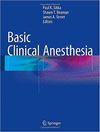
SIKKA, P.; BEAMAN, S.; STREET, J.
Descuento:
-5%Antes:
Despues:
138,31 €This text presents the basic and clinical foundations of anesthesiology. It is easy to read and is comprehensive without being lengthy. Readers can test their knowledge with the “Clinical Review” questions at the end of chapters and will appreciate the abundance of color illustrations, clinical images, and practical tables. Chapters are highly organized and make liberal use of bulleted text where appropriate.
Everything needed in a single source is here, from clinically important basic science to the full range of anesthetic practice: pain management and regional anesthesia, including ultrasound-guided peripheral nerve blocks; specialty anesthesia; preoperative evaluation and intraoperative management; ambulatory and non-operating room anesthesia; and critical care. The book also includes topical chapters on the obese patient, infectious diseases, alternative medicine, substance abuse, cosmetic surgery, robotic surgery, the hazards of working in the operating room, and residency requirements and guidelines.
Feature:
- Brand new introduction to clinical anesthesiology
- Comprehensive coverage of basic, clinical, and practical essentials
- “Clinical Review” questions throughout
- Ultrasound-guided procedures in pain management and regional anesthesia
- Topical chapters on the obese patient, cosmetic surgery, substance abuse, and more
- Residency requirements and guidelines
- For Medical students, Nurse anesthetist students, Anesthesiology residents, and Practitioners
- Ideal for review and exam preparation
Author
Paul K. Sikka, MD, PhD
Department of Anesthesia & Perioperative Medicine
Signature Healthcare Brockton Hospital, Brockton, MA
Affiliate of Beth Israel Deaconess Medical Center, Boston, MA
(Former faculty - Brigham and Women's Hospital, Harvard Medical School)
Table of contents (57 chapter)
1.History of Anesthesia
2.Preoperative Evaluation
3.Approach to Anesthesia
4.Perioperative Airway Management
5.Anesthesia Machine
6.Patient Monitoring
7.Fluid and Electrolyte Balance
8.Transfusion Medicine
9.Mechanisms of Anesthetic Action
10.Inhalational Anesthetics
11.Intravenous Induction Agents
12.Opioids and Benzodiazepines
13.Neuromuscular Blocking and Reversal Agents
14.Antiemetics
15.NSAIDs and Alpha-2 Adrenergic Agonists
16.Diuretics
17.Cardiovascular Pharmacology
18.Local Anesthetics
19.Allergic Reactions
20.Drug Interactions
21.Spinal and Epidural Anesthesia
22.Peripheral Nerve Blocks
23.Ultrasound-Guided Peripheral Nerve Blocks
24.Pain Management
25.Orthopedic Anesthesia
26.Cardiac Anesthesia
27.Vascular Anesthesia
28.Thoracic Anesthesia
29.Neuroanesthesia
30.Ambulatory Anesthesia
31.Non-operating Room Anesthesia
32.Hepatic and Gastrointestinal Diseases
33.Renal and Urinary Tract Diseases
34.Endocrine Diseases
35.Neurological and Neuromuscular Diseases
36.Ophthalmic Surgery
37.Ear, Nose, and Throat Surgery
38.Obstetric Anesthesia
39.Pediatric Anesthesia
40.Critical Care
41.Postoperative Anesthesia Care
42.Obesity
43.The Elderly Patient
44.Pulmonary Aspiration and Postoperative Nausea and Vomiting
45.Acid Base Balance
46.Trauma
47.Spine Surgery
48.Robotic Surgery
49.Patient Positioning and Common Nerve Injuries
50.Substance Abuse
51.Awareness Under Anesthesia
52.Infectious Diseases
53.Alternative Medicine and Anesthesia
54.Cosmetic Surgery
55.Hazards of Working in the Operating Room
56.Operating Room Management
57.Residency Requirements and Guidelines
 -5%
-5%
 -5%
-5%
 -5%
-5%
 -5%
-5%
 -5%
-5%
 -5%
-5%
 -5%
-5%
 -5%
-5%
 -5%
-5%
 -5%
-5%