Descuento:
-5%Antes:
Despues:
158,08 €Dedication
Mitophagy and Biogenesis
Dedication
Autophagy and Cancer
Some Thoughts on Autophagy and Immunity
Autophagy: Friend or Foe?
Autophagy: If and When
What Happened When Autophagy Didn’t
Sugar Isn’t Always Sweet
Mitochondrial Mysteries
The Autophagy Process
Foreword
Foreword
Preface
Autophagy: Volume 1 – Contributions
Autophagy: Volume 2 – Contributions
Autophagy: Volume 3 – Contributions
Autophagy: Volume 4 – Contributions
Autophagy: Volume 5 – Contributions
Autophagy: Volume 6 – Contributions
Autophagy: Volume 7 – Contributions
Chapter 1. Overview of Autophagy
• Abstract
• Introduction
• Specific Functions of Autophagy (A Summary)
• Autophagy in Normal Mammalian Cells
• Endoplasmic Reticulum
• Endoplasmic Reticulum Stress
• Major Types of Autophagies
• Autophagosome Formation
• Autophagic Lysosome Reformation
• Protein Synthesis
• Abnormal Proteins
• Molecular Chaperones
• The Endoplasmic Reticulum
• Autophagic Proteins
• Aggrephagy
• Aggresome, Ubiquitin Proteasome, and Autophagic Systems
• Monitoring Autophagy
• Reactive Oxygen Species (ROS)
• Mammalian Target of Rapamycin (mTOR)
• Role of Autophagy in Tumorigenesis and Cancer
• Role of Autophagy in Immunity
• Autophagy and Senescence
• Role of Autophagy in Viral Defense and Replication
• Role of Autophagy in Intracellular Bacterial Infection
• Role of Autophagy in Heart Disease
• Role of Autophagy in Neurodegenerative Diseases
• Cross-Talk between Autophagy and Apoptosis
• Autophagy and Ubiquitination
• Autophagy and Necroptosis
• Mitochondrial Fusion and Fission
• Selective Autophagy
• References
Part I: Molecular Mechanisms
• Chapter 2. Role of the Beclin 1 Network in the Cross-Regulation Between Autophagy and Apoptosis
1.- Abstract
2.- Introduction
3.- Beclin 1 Structure in Autophagy
4.- Transcriptional Regulation of Beclin 1 in Autophagy
5.- Posttranslational Modification of Beclin 1 in Autophagy
6.- Beclin 1-PI3KC3 Core Complex in Autophagy
7.- Beclin 1-BCL-2 Complex in Autophagy
8.- Beclin 1-Binding Proteins in Autophagy
9.- Beclin 1-Mediated Interplay Between Apoptosis and Autophagy
10.- Conclusions
11.- Acknowledgments
12.- References
• Chapter 3. Role of Sirt1 as a Regulator of Autophagy
1.- Abstract
2.- Introduction
3.- Characteristics of Sirt1
4.- Autophagy
5.- Regulation of Autophagy
6.- Role of Sirt1 as a Regulator of Autophagy
7.- Concluding Remarks
8.- Acknowledgments
9.- References
• Chapter 4. Apoptosis Blocks Beclin 1-Dependent Autophagosome Synthesis
1.- Abstract
2.- Introduction
3.- Apoptosis Inhibits Autophagosome Biogenesis via Dual-Functional Proteins
4.- Apoptosis Inhibition of Autophagosome Formation by Protease Activity
5.- Discussion
6.- Acknowledgments
7.- References
• Chapter 5. Is Selective Autophagy Distinct from Starvation-Induced Autophagy?
1.- Abstract
2.- Introduction
3.- Overview of Autophagy
4.- Selective Autophagy
5.- Autophagy and Disease
6.- Conclusions
7.- Acknowledgments
8.- References
Part II: Role in Cell Death and Disease
• Chapter 6. Molecular Mechanisms Underlying Cell Death Caused by Cationic Polymers
1.- Abstract
2.- Introduction
3.- Characteristics of Cationic Polymers
4.- Brief Overview of Molecular Mechanisms of Cell Death
5.- Molecular Mechanisms of Cell Death Caused by Cationic Polymers
6.- Conclusions
7.- Acknowledgments
8.- References
• Chapter 7. The Role of Autophagy in Cell Death
1.- Abstract
2.- Introduction
3.- Cell Death Subroutines
4.- Autophagy and Apoptosis
5.- Autophagy and Programmed Necrosis
6.- Autophagy and ACD
7.- Autophagy: A Complex Dynamical System
8.- Conclusions
9.- References
• Chapter 8. The Role of Autophagy and Mitophagy in Mitochondrial Diseases
1.- Abstract
2.- Introduction
3.- Mitochondrial Diseases
4.- Autophagy
5.- Mitophagy
6.- Mitophagy in Mitochondrial Diseases
7.- Conclusions
8.- References
• Chapter 9. Autophagy Regulation by HMGB1 in Disease
1.- Abstract
2.- Introduction
3.- Nuclear HMGB1-Mediated Autophagy
4.- Cytosolic HMGB1-Mediated Autophagy
5.- Extracellular HMGB1-Mediated Autophagy
6.- Transcriptional Regulation of HMGB1 in Autophagy
7.- Posttranslational Modification of HMGB1 in Autophagy
8.- HMGB1-Mediated Autophagy in Cancer Therapy
9.- HMGB1-Mediated Autophagy in Inflammation
10.- HMGB1-Mediated Autophagy in Immunity
11.- HMGB1-Mediated Autophagy in the Central Nervous System
12.- Conclusions
13.- Acknowledgments
14.- References
• Chapter 10. Autophagy Defects and Lafora Disease
1.- Abstract
2.- Introduction
3.- Pathomechanisms of Lafora Disease
4.- Conclusions
5.- References
• Chapter 11. Regulation of Autophagy in Parkinson’s Disease: Insights into New Therapeutic Targets
1.- Abstract
2.- Introduction
3.- Autophagy in PD
4.- Autophagy as a Therapeutic Strategy
5.- Concluding Remarks
6.- Acknowledgments
7.- References
Part III: Role in Cancer
• Chapter 12. Role of Autophagy in Cancer Development via Mitochondrial Reactive Oxygen Species
1.- Abstract
2.- Introduction
3.- Mitochondria and mitoROS
4.- Relationship Between mitoROS and Autophagy
5.- mitoROS-Regulated Autophagic Pathway in Cancer
6.- Antitumor Drugs Targeting mitoROS-Related Autophagy
7.- Conclusions and Perspectives
8.- References
• Chapter 13. Role of Autophagy in Cancer Therapy
1.- Abstract
2.- Introduction
3.- Dual Role of Autophagy in Cancer
4.- Therapy-Induced Stress and Autophagy
5.- Autophagy and Tumor Immunity
6.- Therapeutic Strategies Targeting Autophagy
7.- Discussion
8.- References
• Chapter 14. The Role of Autophagy in Cancer and Chemotherapy
1.- Abstract
2.- Introduction
3.- Pro- and Antitumor Functions of Autophagy in Tumorigenesis
4.- The Dual Effect of Autophagy in Chemotherapy
5.- Discussion
6.- Acknowledgments
7.- References
• Chapter 15. Autophagy Activation in the Tumor Microenvironment: A Major Process in Shaping the Antitumor Immune Response
1.- Abstract
2.- Introduction
3.- Hypoxia-Dependent Activation of Autophagy
4.- EffectS of Hypoxia-Induced Autophagy on the Antitumor Immune Response
5.- Autophagy Inhibition in Cancer Therapy: Friend or Foe?
6.- Concluding Remarks
7.- Acknowledgments
8.- References
• Chapter 16. Omega-3 DHA and EPA Conjugates Trigger Autophagy Through PPAR? Activation in Human Breast Cancer Cells
1.- Abstract
2.- Introduction
3.- DHA and EPA Conjugates Induced Autophagy: Regulation of Beclin-1
4.- Autophagic Process Triggered by DHA and EPA Conjugates
5.- PPAR? as Central Mediator in the Cross Talk Between Autophagy and Apoptosis
6.- Discussion
7.- References
• Chapter 17. Pro-oxidative Phytoagents Induce Autophagy in Tumors: Villain or Benefactor in Cancer Treatment?
1.- Abstract
2.- Introduction
3.- Autophagy in Cancer
4.- Autophagy in Anticancer Activities of Pro-oxidative Phytoagents
5.- Final Remarks
6.- Acknowledgments
7.- References
Abbreviations and Glossary
Index
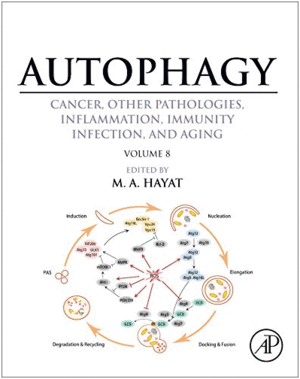
Understanding the importance and necessity of the role of autophagy in health and disease is vital for the studies of cancer, aging, neurodegeneration, immunology, and infectious diseases. Comprehensive and forward-thinking, these books offer a valuable guide to both cellular processes while inciting researchers to explore their potentially important connections. Volume 8 concentrates on the role of autophagy in human diseases, including tumorigenesis. The diseases discussed include melanoma, liver cancer, pancreatic cancer, and neurodegenerative disorders. Loss of autophagy in the central nervous system causes neurodegeneration (Alzheimer ’s disease, Huntington’s disease, Parkinson ’s disease, and Amytrophic Lateral Sclerosis). Melanoma is one of the most serious diseases in humans. Autophagy plays a key role in the anticancer response to chemotherapy. However, autophagy can increase or decrease the effectiveness of chemotherapy. The reasons for these contradictory effects are explained. Autophagy also plays a role in idiopathic inflammatory diseases, infection, and immunity. An explanation is given on how autophagy is closely linked to control innate and adaptive immune responses in host defense in part by regulating cytokine production. The role of autophagy in cutaneous malignant melanoma is discussed in detail, and expression of Beclin 1 and LC3 autophagic genes in melanoma is included to explain the molecular mechanisms underlying this very serious disease, which tends to metastasize to the brain. The effect of the treatment of this disease using Terfenadine through the induction of autophagy and apoptosis is also included. Autophagy and apoptosis are two main mechanisms involved in programmed cell death.Volume 8 reviews recent advancements in the molecular mechanisms underlying a large number of genetic and epigenetic diseases and abnormalities, and introduces new, more effective therapeutic strategies in the development of targeted drugs and programmed cell death, providing information that will aid on preventing detrimental inflammation. This book is an asset to newcomers as a concise overview of the role of autophagy in human diseases, while serving as an excellent reference for more experienced scientists and clinicians looking to update their knowledge.
Features:
• Presents the most advanced information regarding the role of the autophagic system in life and death and whether autophagy acts fundamentally as a cell survivor, or cell death pathway, or both
• Introduces new, more effective therapeutic strategies, in the development of targeted drugs and programmed cell death, providing information that will aid on preventing detrimental inflammation
• States recent advancements in the molecular mechanisms underlying a large number of genetic and epigenetic diseases and abnormalities.
Author
M. A. Hayat, Distinguished Professor, Department of Biological Sciences, Kean University, Union, NJ, USA
 -5%
-5%
 -5%
-5%
 -5%
-5%
 -5%
-5%
 -5%
-5%
 -5%
-5%
 -5%
-5%
 -5%
-5%
 -5%
-5%
 -5%
-5%