Descuento:
-5%Antes:
Despues:
138,31 €1. Laboratory Findings: To What Degree Can We Extrapolate the Animal Data to the Bedside?
2. Clinical Findings Including Prevention and Treatment
3. Implications for Pediatric Anesthesia
4. Present Clinical Status of Postoperative Delirium (POD)
5. Present Clinical Status of Postoperative Cognitive Dysfunction in Cardiovascular Surgery
6. Present Clinical Status of Postoperative Cognitive Dysfunction Following Noncardiac Surgery
7. Diagnosis of POD and POCD
8. Prevention and Treatment of Postoperative Delirium and Postoperative Cognitive Dysfunction
9. Mechanisms of POD and POCD: Effects of Anesthetics
10. Mechanism of POD and POCD - Effect of Other Than Anesthetics
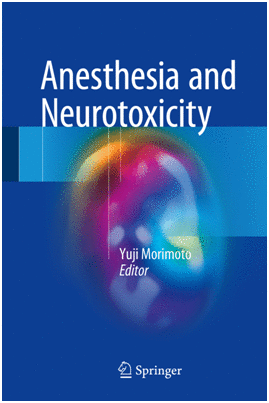
This book, written by leading Japanese experts in the field, describes the latest findings on the neurotoxicity of anesthetics for the developing brain, postoperative delirium and cognitive dysfunction.
It describes the risk factors for postoperative cognitive dysfunction in elderly surgical patients. Since the number of elderly patients undergoing surgery and anesthesia continues to increase, it is important to improve our understanding of the risks and mechanisms of postoperative delirium and cognitive dysfunction, potential ways to prevent or alleviate them and the public health implications.
Recently, it has been shown that using anesthetics on the developing brain causes apoptotic neurodegeneration and persistent learning/memory deficits later in life. Anesthesiologists need more information on this mechanism in the human brain.
The negative effects of anesthesia and surgery on the nervous system have attracted attention lately; this book provides physicians, researchers, and postdocs with invaluable information on this topic.
Features
• Describes current topics of neurotoxicity of anesthesia
• Suggests a strategy for the prevention and treatment of perioperative neurotoxicity
• Contains valuable contributions from well-known professionals
 -5%
-5%
 -5%
-5%
 -5%
-5%
 -5%
-5%
 -5%
-5%
 -5%
-5%
 -5%
-5%
 -5%
-5%
 -5%
-5%
 -5%
-5%